Visit our Re-post guidelines
Subsequent to the “discovery” of Ebola in 1976, the din of hysteria over the outbreak of this “new” virus diminished considerably. But it did not altogether disappear. For the next forty years, the public was fed a steady stream of low-level warnings of a “microscopic terror” lurking in the jungles of Africa. No one was allowed to forget that this “invisible menace” was still close at hand.
To maintain that baseline of public anxiety, the media would regularly circulate reminders of smaller “outbreaks,” laboratory accidents, and “single-case spillovers.”
These minor events were broadcast throughout the 1970s, ‘80s, and ‘90s. Localized incidents were reported by various health officials in the Democratic Republic of the Congo (DRC), as well as in Sudan, Gabon, Ivory Coast, South Africa, and Uganda.
The “outbreaks” of this alleged highly infectious virus were essentially limited to clusters in these destitute African countries and had not yet made an appearance in first-world countries.
This tactic of repeatedly sending out memos of fear-inducing Ebola events, of framing the issue as an urgent and continuous crisis, kept worldwide audiences in a chronic state of heightened alert.
Soon enough, though, the faint hum of disquiet would be turned into a full-fledged roar of horror when Richard Preston’s steamy bestseller, The Hot Zone, was released in 1994.
Ebola Becomes A Bestseller: The Hot Zone
In 1992, The New Yorker magazine journalist Richard Preston wrote an article titled “Crisis in the Hot Zone,” which served as the foundation for his 1994 book, The Hot Zone: A Terrifying True Story. The book sold around 800,000 hardcover copies in its initial rollout, propelling it onto The New York Times bestseller list and exponentially magnifying Ebola’s scary reputation.
The Hot Zone was marketed just as its subtitle portrayed it: as a “terrifying true story.” The tale prompted “King of Horror” author Stephen King to call the opening chapter “one of the most horrifying things I’ve read in my whole life.”
But The Hot Zone’s description of Ebola proved to be a little “hotter” than was warranted. Preston outrageously amplified the alleged symptoms of Ebola by, for instance, depicting the disease as the cause of the “liquefaction” of internal organs, which he claimed resulted in victims literally “dissolving.” The entire hyped-up narrative left readers with the impression that Ebola produces massive, uncontrolled bleeding from every orifice of the body.
Even book reviewers who generally sided with the accepted view of Ebola denounced his wild distortions.
For example, acclaimed science journalist David Quammen criticized The Hot Zone‘s extremely graphic prose. “Ebola is not like how it’s portrayed in the book,” he groused. “People do not dissolve. Their internal organs do not liquefy. People do not shed bloody tears.” He went on to argue that Preston’s reliance on hyperbole fundamentally warped the public’s understanding of the disease. When Quammen interviewed Karl Johnson, the scientist who helped “discover” and name the Ebola virus, Johnson dismissed Preston’s exaggerated descriptions of symptoms as “bullshit” and noted that patients do not physically disintegrate.
The book’s second half focuses on an alleged 1989 outbreak of a mysterious “virus” that appeared to be infecting imported laboratory monkeys at a research facility in Reston, Virginia—just fifteen miles from Washington, D.C.
That supposedly lethal pathogen, later named Ebola Reston, was touted as the first strain of the Ebola “virus” to be detected in the Americas. Curiously, though, none of the health workers who were “exposed” to that “deadly” disease fell ill. Four lab workers did test “positive” for what were presumed Ebola Reston antibodies—but somehow they never got sick.
Yet, even though this new variant turned out to be non-lethal and asymptomatic in humans, Preston embellished the account of how a secret containment operation launched by scientists and soldiers from the US Army Medical Research Institute of Infectious Diseases had “heroically” prevented a domestic pandemic.
As it turned out, the claimed lethality of this Ebola “variant” was restricted to the imported cynomolgus macaques who were held captive inside the Reston Primate Quarantine Unit (otherwise known as the “Monkey House”) on the grounds of the Hazleton Research Products facility. But this so-called Ebola variant, too, would fail to pass a credibility test when examined in detail.
What Preston had omitted from his cinematic terror tale, and what was missing from all news media reports, were the gruesome, all-too-real atrocities the macaques endured when they were captured then transported to the research facility. Also absent from his account were the barbaric conditions the monkeys faced once they were imprisoned inside the Reston facility.
The capture and transport conditions for the macaques involved in the Reston incident—and the broader laboratory monkey trade of the late 1980s—were notoriously severe and traumatic.
Local trappers in the coastal rainforests of the Philippines (primarily Mindanao Island) captured wild monkeys using nets, snares, or traps. They frequently targeted mother-infant pairs, usually killing the protective mothers in order to capture the highly sought-after infants or juveniles. These free-living, intensely social primates were suddenly ripped from their family units, bound, and thrown into either isolation pens or cramped holding pens packed with terrified, helpless young monkeys.
The captives were then funneled to large export facilities in coastal cities, where thousands of wild-caught monkeys from various regions of Southeast Asia were crammed into large, open-air communal cages. These export centers were so understaffed that employees couldn’t keep the cages clean, which resulted in the living quarters—if you can call them that—being heavily contaminated with vomit, feces, urine, and blood.
As if those conditions weren’t traumatizing and disease-inducing enough, the monkeys then had to endure a brutally long flight from Manila through Amsterdam to New York. They spent days confined inside small, dark, poorly ventilated wooden crates stacked on top of each other in the cargo holds of commercial airliners. Waste from sick monkeys in the upper crates leaked down onto monkeys in lower crates. The unbearable noise, dramatic temperature shifts, claustrophobic space, and their restricted access to clean food and water inevitably produced extreme physiological stress.
By the time the crates of monkeys were unloaded in New York and trucked to Reston, Virginia, the occupants were profoundly immunocompromised from weeks of terror, malnutrition, illness, and exhaustion.
The Hazleton Research Products facility was notorious for its structural deficiencies, poor sanitation, and all-around wretched environment. Investigative reports and historical accounts from epidemiologists documented major operational flaws at the “Monkey House.” Just as they had been on their harrowing journey from the jungle, hundreds of young macaques were sardined into small, stacked cages in the Reston lab. Sick and dying monkeys languished in cages on top of or next to their still-healthy counterparts. Once more, feces, urine, and blood flowed freely.
The parent company Hazleton Laboratories (which later became Covance and eventually Fortrea) had a long, documented history of health and safety violations. Decades of subsequent undercover investigations by animal rights groups exposed systemic cruelty across all the company’s regional labs. Workers were recorded physically abusing the primates, ignoring serious injuries, and failing basic compliance metrics under the federal Animal Welfare Act.
In 1990, the year following the disastrous 1989 “Ebola outbreak,” Hazleton abandoned the Reston building. Five years later, the structure was demolished. Today, the repurposed site features a commercial office block and a Kindercare daycare center.
The legacy of Preston’s popular book would mushroom, serving as the inspiration for the 1995 medical disaster film Outbreak and eventually being adapted into a dramatic National Geographic mini-series. Critics and epidemiologists alike asserted that Preston had sensationalized the plot, but their assurances didn’t prevent audiences from being terrified or quell public hysteria. Global delirium levels were off the charts. Not surprisingly, the fever pitch of the fear served as a catalyst for more funding of biosecurity and viral research—even if it did so at the expense of clinical accuracy.
The Reston story served as the first real-world domestic test of US biocontainment protocols and directly shaped modern-day US biodefense agencies. Acknowledging that the monkeys were being tortured in these experiments and that it was this suffering that caused their illnesses and deaths was off limits and shouted down by the “Ebolaganda” hysterics that broke out in the 1990s and that have been smoldering ever since.
We would be remiss if we were to write about the Ebola scare without asking the critical question, Qui bono?
Perhaps the answer could be put this way: Multibillion-dollar contracts that spanned decades of highly profitable research and development depended on the Ebola bogeyman’s continued existence. Those healthy profits—plus the prospect of even greater gains in the future—kept the burgeoning biosecurity industry humming along while they waited for “the big one” to arrive.
Sure enough, the apocalyptic firestorm they were waiting for did erupt. The year was 2014. That was when the wheels of Ebola fortune were finally put in motion.
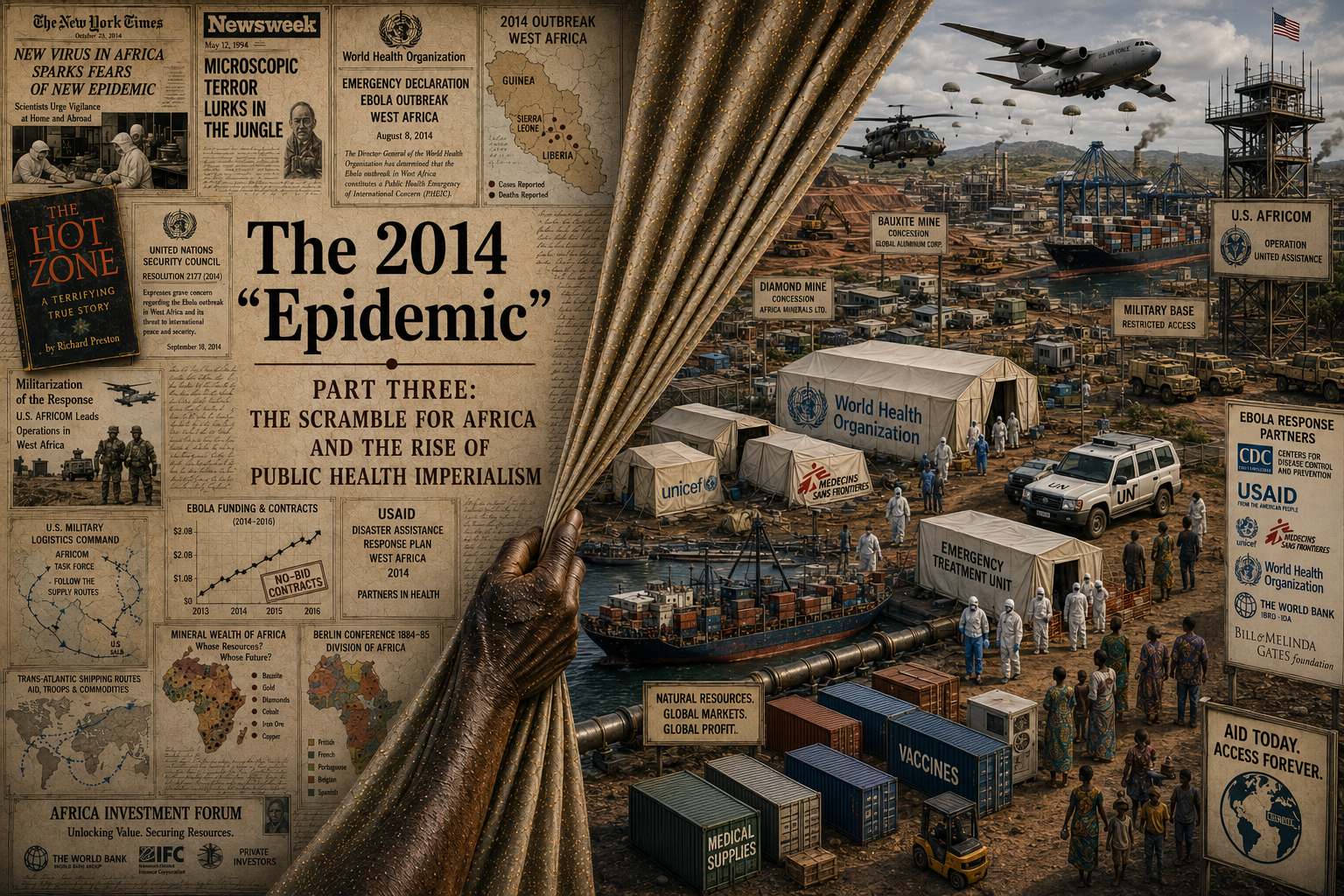
The 2014 Ebola “Epidemic” in Africa
In 2014, the West African Ebola epidemic became world news. It was heralded as the largest and deadliest Ebola “outbreak” in history. Centered primarily in Guinea, Liberia, and Sierra Leone, the landmark event resulted in more than 28,600 reported “cases” and 11,325 deaths. The contagion was officially said to have originated in rural Guinea and then spread to neighboring Liberia and Sierra Leone.
The standard version of events goes like this:
The “outbreak” began in December 2013 in the remote village of Meliandou, Guinea, where a toddler fell ill with a mysterious disease and succumbed to the illness a few days later. The two-year-old boy, Emile Ouamouno, was identified as “Patient Zero.” Retrospective investigations suggested that Emile contracted the Zaire strain of the virus from playing near a hollow tree that was home to “infected” fruit bats.
As the story goes, it was months before anyone suspected the existence of Ebola. The reason Emile’s condition wasn’t identified immediately is that the symptoms of this novel entity named “Ebola” perfectly matched other diseases endemic to the region. When he ran a sudden high fever, everyone assumed it was just a severe bout of malaria. In this remote part of the world, children regularly succumb to cholera, malaria, measles, typhoid, Lassa fever, and a host of other illnesses that have no name.
When Emile’s father took him to the village health post, he paid 20,000 Guinean francs (about 2.75 US dollars) for a bundle of basic medications. In a remote setting like rural Guinea, “pharmaceutical treatment” meant cheap, unmonitored generic medicines bought in bulk from general stores, open-air markets, or traveling vendors. Based on standard West African rural health practices for acute febrile and diarrheal illnesses, the specific low-resource pharmaceuticals used would include basic antimalarial drugs such as chloroquine or sulfadoxine-pyrimethamine (Fansidar).
The initial 20,000-franc bundle of standard oral pills failed to help the youngster. So, the local medics escalated treatments.
When Emile began experiencing vomiting, diarrhea, and black stools, the nurse assumed he had a severe bacterial gastrointestinal infection and began treating him with commonly used broad spectrum beta-lactam antibiotics such as Ciprofloxacin, Amoxcillin, or Cotrimoxazole.
Then some of his family members became ill. They, too, received progressively intensive treatments. These higher tiers of local healthcare included repeated intravenous saline drips and heavy antibiotic/antimalarial injections.
But because all the medications that were tried proved ineffective, the family kept returning to the clinic for more expensive treatments.
Having determined, for example, that oral medications were useless against intense vomiting, the medical staff relied entirely on parenteral injections. The saline and glucose fluids were pushed directly into the patients’ veins, while the high-dose antibiotics and antimalarials were injected deep into the muscle tissue of their thigh or buttocks. Parenteral delivery requires strict sterility.
The clinic lacked both electricity and autoclaves (chambers that sterilize medical equipment). It also lacked chemical disinfectants that “clean” the needles between uses. Staff resorted to rinsing the needles in warm, stagnant well water or superficially wiping them down. Also, due to its persistent paucity of resources, the local village health post routinely reused needles and plastic syringes across multiple patients to conserve supplies. Medical workers frequently re-entered shared medicine vials or saline bags using a previously contaminated syringe.
When Emile’s pregnant mother began experiencing internal bleeding, local health workers assumed one of two causes: She was either suffering from an extreme complication of typhoid fever (which can cause intestinal perforation and bleeding) or she had advanced, pregnancy-related sepsis. They prescribed premium, higher-generation, broad-spectrum antibiotics, which are generally not recommended for pregnant women.
Tragically, Emile’s pregnant mom, sister, grandmother, and an aunt all passed away.
It is standard practice for doctors to omit the precise details of medical treatments and of what happens to individuals once they begin receiving those treatments. That unwritten rule of self-imposed silence appears to be in obeisance to what we might call “the pathogen uber alles” storyline. Odd to always pinpoint pathogens, isn’t it, especially considering these “outbreaks” are invariably centered around hospitals.
The unwritten rule meant no discussion was allowed about how the water supply was so inherently unsafe in Meliandou in 2011 that a catastrophic “cholera outbreak” devastated the village. Perhaps this explains why, when the health workers and the WHO officials arrived in Meliandou in 2014 to investigate the illnesses, they originally diagnosed the outbreak as a resurgence of cholera.
The unwritten rule also meant no discussion was allowed of how the illegal import, trade, and application of highly hazardous, banned pesticides in Guinea reached record highs in 2014, thanks to a perfect storm of (1) economic expansion, (2) breakdown of border enforcement, and (3) poor regulatory oversight. As a result, massive quantities of globally banned substances flooded local agricultural supply chains and found their way into water supplies throughout Guinea.
Specifically, when mislabeled, counterfeit pesticides manufactured abroad bypassed official Guinean regulatory frameworks, chemicals like Paraquat (banned or heavily restricted in many jurisdictions) and Carbofuran (highly toxic to humans and wildlife) routinely fell into the hands of Guinean farmers.
But such blatant offenses are only one aspect of the wide-ranging whitewashing of on-the-ground realities that contradict the false “Ebola” narrative. The culprits obviously want the world to blame “Ebola” instead of blaming the purposeful mass poisoning and medical mismanagement—not to mention the horrible living conditions in these rural African communities.
On March 23, 2014, the World Health Organization (WHO) officially declared a “rapidly evolving” “outbreak” of Ebola Virus Disease (EVD) in the forested regions of southeastern Guinea. Over the ensuing months, the “outbreak” “rapidly spread” to neighboring Liberia and Sierra Leone. A sprinkling of “cases” were also reported in Senegal, Nigeria, and Mali—countries that are among the most impoverished in the world.
On August 8, 2014, the WHO officially declared the West African Ebola virus epidemic a Public Health Emergency of International Concern (PHEIC, pronounced “fake”). That declaration marked a major turning point in global health security. From then on, the 2014 Ebola crisis completely changed the global biosecurity landscape. Public health was transformed from a technical, medical issue into an explicit hard national security priority.
Let’s pause for a moment to consider the grave implications and profound consequences of using Africa, decade after decade, as a dumping ground for banned pesticides and banned medicines and as a testing ground for Western pharmaceutical companies that regularly conduct experimental drug trials on African populations.
Let’s also acknowledge how Africa has been ruthlessly exploited for decades by colonial powers and by today’s multinational corporations.
And let’s reckon with the fact that the majority of Africans live in poverty and mass starvation despite the countries they reside in being tremendously rich in natural resources.
It has been well documented that these monstrous living conditions are responsible for bringing about every bodily affliction under the sun. Why the need to trump up a new disease?
For that answer we return to our investigation and the “Scramble for Africa.”
The Scramble for Africa
From the late 1800s to the 1930s, the “Scramble for Africa” was code language for the Western powers’ routine practice of invading, dividing, and colonizing the African continent for their own economic and political gain.
From November 15, 1884, to February 26, 1885, the European powers and the United States met at the Berlin Conference in Berlin, Germany, to establish “guidelines” for the partitioning of Africa.
Behind the polite, quaint, historical term “scramble” was a brutal process of forcibly eliminating existing indigenous states and societies in order to secure valuable raw materials like rubber, copper, gold, diamonds, and palm oil to fuel the expanding Second Industrial Revolution.
Western nations accompanied their colonization of Africa with the establishment of allopathic medical clinics, which were intended to replace traditional folk medicine. They deployed highly toxic arsenic-based drugs and often used coercive, deceptive, even psychologically and physically abusive methods to gain the locals’ trust and compliance. Everything they did was under the guise of providing humanitarian aid.
Doctors practicing in these clinics in numerous villages throughout Africa relied on harmful, even fatal, heavy-metal formulations such as Atoxyl, Tryparsamide, and Melarsoprol. These arsenic drugs and derivatives often caused permanent blindness and sometimes death. Melarsoprol, which patients called “fire in the veins” because of the excruciating pain of the injection, became the standard treatment for decades. Its toxicity killed roughly 1 in 20 patients.
These Western medical campaigns—“attacks” might be a more apt term—were not exactly sought after by the African populace. Often their true purpose was concealed. The famous German scientist Robert Koch set up an isolation camp on the islands of Lake Victoria, where he experimented with escalating doses of Atoxyl on Africans to see how much arsenic a human body could tolerate. In French Equatorial Africa, mobile military medical teams forced entire villages to line up at gunpoint. Anyone suspected of being ill was forcibly injected with toxic medications.
Along with their arsenic campaigns, Western nations deployed synthetic insecticides and chemical defoliants across Africa. They framed these operations as humanitarian efforts to eliminate pests and “modernize” the continent.
By the 1940s, European administrators had rapidly scaled up the usage of DDT across Africa with forced applications—much like the arsenic campaigns. Colonial health teams entered African villages and carried out mandatory Indoor Residual Spraying (IRS) by forcing residents to empty their homes then coating the walls with heavy layers of DDT.
Under the guise of combating African “sleeping sickness,” colonial governments sprayed millions of liters of DDT and dieldrin over vast landscapes throughout Africa, decimating wildlife and contaminating water basins.
As the mid-1900s progressed and African nations began fighting for independence, Western powers dropped toxic defoliants on the rain forests and rural farmlands. This tactic was utilized as a means of stripping away the dense jungle canopy, which provided cover for independence fighters, and of systematically destroying crops that fed local populations, in order to force them into submission through starvation.
Those imperial ambitions and behaviors persist to this day. Similar to the “Scramble for Africa” of a bygone era, today the exploitation and mass poisoning continues unabated. Coincidentally, the same African nations that were at the “epicenter” of the alleged 2014 “Ebola outbreak” also happen to sit atop vast resource wealth that is now dominated by multinational corporations.
Guinea, the former French colony, has some of the largest mineral deposits on earth, including high-grade iron ore, diamonds, uranium, gold, and half of the world’s total reserves of bauxite, from which aluminum is derived.
Liberia is home to the world’s largest rubber plantation. Operated by Firestone (Bridgestone) since 1926, it has extensive iron ore deposits and vast palm tree plantations for palm oil cultivation. Liberia also possesses massive reserves of gold, diamonds, and timber as well as critical transition minerals and rare earth elements. Offshore blocks along the Atlantic coastline of Liberia hold estimated potential reserves exceeding 1 billion barrels of crude oil.
Sierra Leone possesses large stores of mineral wealth and iron ore, which supplies massive amounts of high-grade hematite to the global steel industry. The country is famous for producing gigantic, gem-quality rough diamonds and is one of the world’s top five producers of rutile, a mineral composed of the chemical compound titanium dioxide and an essential material in the production of high-performance aerospace alloys.
The extractive and agricultural industries have in a sense been a “curse” to the resource-rich Guinea, Liberia, and Sierra Leone. The megacorporations coveting these metals, minerals, and agricultural products have histories of causing enormous environmental pollution, which has devastated local ecosystems and public health.
When, for example, Guinea’s hyper-aggressive bauxite boom took off in 2014, it was fueled by a flood of foreign investment and the creation of its largest bauxite consortium. Bauxite, by the way, is a sedimentary rock that is the world’s main source of aluminum and gallium.
As we said, the bauxite boom in Guinea began in 2014. The same year, the purported Ebola outbreak paralyzed Guinea’s state institutions. The Guinean Ministry of Environment was left with zero capacity to enforce regulations. This regulatory void triggered widespread unmonitored pollution—pollution of air, water, and soil across the Boké and Kamsar bauxite mining belts.
Below are blow-by-blow details of how this colossal environmental disaster swept through Guinea, Liberia, and Sierra Leone, respectively.
GUINEA
In 2014, multinational mining firms began clearing thousands of hectares of ancestral farmlands, orchards, and protective canopy forests to reach the bauxite ore in Guinea. Stripping the topsoil exposed the raw, iron-rich earth. Without the forest roots to hold the soil, the torrential rainy season that typically lasts from June to November washed thousands of tons of red mud and heavy sediment straight down the valleys.
Rivers and the streams supplying Guinea’s rural villages with fresh water were physically choked by mining runoff. The sediment turned fresh, clear water into a thick, opaque, rust-black sludge. Deep surface drilling and open blasting exposed sulfide-bearing minerals to the elements, prompting massive chemical reactions and creating what is called “acid mine drainage.” AMD is a pollutant that degrades surface water and groundwater, renders local wells toxic, destroys aquatic ecosystems, and can persist for decades or centuries after mining operations have ceased.
The same year, 2014, the infrastructure that enabled the Guinea bauxite to be transported consisted of hundreds of unsealed, heavy mining trucks that thundered down the mining belt’s dirt roads all day and night. Investigations later published by Human Rights Watch documented that, starting in 2014, Guinea villages, homes, and food crops were permanently blanketed in thick, red aluminum-oxide dust. This respiratory hazard triggered an immediate spike in violent coughing spells, asthma, and eye infections among local populations and also destroyed their agricultural yields—their food supply.
Because the government of Guinea was hamstrung by the Ebola dictates, environmental inspectors stopped visiting mining sites. The mining companies took advantage by operating with total impunity. They stopped monitoring air quality. They quit testing the public water. And, worse yet, they provided no compensation to the communities whose water and land they were ruining.
The 2014 Ebola crisis, so-called, caused a catastrophic collapse of health infrastructure in the mining towns of Guinea, Liberia, and Sierra Leone. The intersection of massive industrial pollution and a complete cessation of non-Ebola medical services resulted in devastating health metrics. Clinics in mining towns became isolation wards or closed down out of fear. Routine healthcare plummeted to near zero.
LIBERIA
In 2014, the long-standing environmental pollution crisis at the Firestone Liberia plantation in Harbel directly collided with the catastrophic West African Ebola outbreak. Because the nation was engulfed by a public health emergency, the environmental liabilities of the world’s largest rubber plantation took on a highly specific and dangerous form.
The Liberian Environmental Protection Agency (EPA) redirected its entire staff and limited budget toward emergency health monitoring, quarantine enforcement, and Ebola response logistics. Consequently, routine audits and water-quality spot checks at Firestone’s processing facilities in Harbel ceased. Millions of gallons of untreated or under-treated factory effluents were allowed to drain unmonitored directly into local waterways.
Liberian communities reported that the Farmington River took on a dark, discolored appearance, which was accompanied by an intense, choking odor. Watchdog groups reported high levels of formic acid, ammonia, and chemical waste in the river. Local communities reported severe skin rashes, infections, nauseating chemical fumes, and the total depletion of local fish stocks—their main source of protein.
Villagers who relied on the local creeks for bathing, washing clothes, and drinking water developed skin rashes, chemical dermatitis, and lesions upon contact with the water. But anyone exhibiting acute skin rashes or abdominal pain from drinking contaminated well water was immediately diagnosed as having Ebola—a verdict that set off profound social panic.
The open-air, low-tech waste lagoons on the Firestone plantation that were used to process latex sludge continuously off-gassed toxic air pollutants. Air tracking in and around Harbel noted that concentrations of hydrogen sulfide (the “rotten egg” gas) and pure ammonia hovered at twice the globally accepted background safety limits. This chronic air pollution caused persistent eye inflammation and respiratory issues among plantation workers and nearby residents.
What do you make of these four “coincidences”:
[1] The gastrointestinal and systemic symptoms caused by drinking toxic chemical runoff from Firestone’s plantation overlapped with the Ebola diagnosis. When residents ingested or came into contact with water contaminated by the factory’s chemical effluents, they suffered acute physical reactions that perfectly matched the WHO’s early clinical assessments of Ebola.
[2] The abdominal pain and vomiting caused by the ingestion of ammonium nitrate and formic acid were the same symptoms that were used as the primary red flags by health teams to identify potential Ebola “cases.”
[3] The bloody diarrhea caused by ingesting high concentrations of rubber-processing chemicals was the very same symptom that would be classified as a definitive sign of “Ebola-induced hemorrhagic progression.”
[4] The nosebleeds and internal irritation and chronic headaches caused by inhaling the airborne ammonia and acid vapors that were hovering over waste lagoons were the same symptoms that “health workers” would misidentify as “Ebola-induced hemorrhaging.”
SIERRA LEONE
Sierra Leone is exceptionally rich in mineral resources such as gem-quality diamonds, rutile, bauxite, gold, and iron ore. But, despite this mineral wealth, the exploitation of resources failed to translate into a higher standard of living for everyday citizens in the country. In 2014, almost three-quarters of the population—72.5%—lived in poverty and the Gross National Income per capita was a mere $660.
The mining boom of 2014 in Sierra Leone triggered harsh human rights abuses and land dispute issues.
Hand in hand with the 2014 mining boom was drastic environmental pollution that ravaged local ecosystems and communities. Weak oversight by the regulatory authorities permitted major mining concessions to prioritize rapid extraction over environmental safeguards, leaving behind a toxic legacy.
Massive iron ore operations in Sierra Leone districts like Tonkolili and Port Loko generated millions of tons of waste. Tailings dams frequently leaked, discharging thick, iron-rich sludge and hazardous chemical waste directly into vital waterways like the Pampana River, the Rokel River, and the Tonkolili River.
Siltation choked local streams, wiping out fish populations that riverside villages relied on for protein. The bodies of water became unfit for drinking, washing, and agricultural irrigation. Multi-ton open-cast mining operations cleared large swaths of pristine rainforests and rich topsoil, destroying local biodiversity. The removal of topsoil coupled with chemical contamination permanently degraded the fertility of surrounding farmlands. The overall effect was to strip thousands of Sierra Leone’s indigenous farmers of their livelihood and to precipitate a localized food security crisis.
The water contamination caused by Sierra Leone’s 2014 mining boom generated long-term public health crises in the rural populations. Because local communities rely on major river systems—Pampana, Rokel, and Sewa—for drinking, cooking, and fishing, the discharge of toxic waste led to chemical poisoning of humans and non-humans.
Longitudinal tracking published via the US EPA Reference Database shows that riverine populations face dangerously high lifetime cancer risks from ingesting contaminated water and fish. The mean lifetime cancer risk for children living near mining zones along the Pampana River was found to be 9.42 × 10⁻³—a rate significantly higher than safe global thresholds.
The surge in gold extraction in Sierra Leone led to an unchecked rise in the use of mercury, which bioaccumulates in the local fish stock. The mercury in ingested water and in the fish “attacks” the central nervous system, leading to tremors, memory loss, vision impairment, and permanent kidney and liver damage.
The use of cyanide in industrial processing and the presence of acidic mine drainage compromised the community water sources in Sierra Leone. Lacking alternative water systems, villagers were forced to use the rivers for bathing and washing, which caused skin lesions, chemical burns, and non-healing rashes. Drinking the highly turbid water caused chronic diarrhea and gastrointestinal tract infections.
At this point, readers will know what we’re going to say next. Yes, patients arriving at clinics with diarrhea, vomiting, and skin lesions from drinking toxic, turbid river water were frequently misclassified as “suspected Ebola cases.” Because the physical symptoms of chemical runoff looked so similar to the early stages of what they were calling “Ebola,” panic ensued in mining villages, and thousands of villagers fled to neighboring regions.
Accompanying the ills caused by the mining industry in Sierra Leone were the maladies caused by the agrochemical industry in Sierra Leone. Over 60% of the pesticides utilized by local rice farmers were smuggled into the country illegally. Smallholder farmers purchased these unmonitored chemicals in tiny, inexpensive batches. By routinely over-spraying their rice swamps with these pesticides, they introduced synthetic residues directly into local aquatic food chains. This widespread use of agricultural pesticides collided calamitously with the heavy-metal runoff from the mining boom, turning rural waterways into a stew of chemical drainage streams.
As you can imagine, the double-pollution exacerbated the gastrointestinal and skin toxicity symptoms that so closely and conveniently mimicked what were said to be the early stages of Ebola.
We have a question. The answer is obvious, but we must ask anyway: How is it that when the locals got Ebola-like symptoms after drinking and bathing in Guinea’s and Liberia’s and Sierra Leone’s extremely toxic water, the global public health community wanted the world to scapegoat “Ebola” rather than the chemical poisoning and the horrific living conditions?
The catastrophic impacts of this modern-day Scramble for Africa have been endemic to the whole continent. And yet the human misery that was created by the multinational corporations and their accomplices is abstract, even to the most aware of Western observers.
To express concern for, much less acknowledge, the depth and breadth of this mortal suffering is anathema to those in power. Instead, callous oligarchs and their political minions look past the suffering and see an opportunity to further their imperial objectives. The Ebola narrative is their Trojan horse whose insides are inhabited by the foot soldiers of the global medical syndicates.
The events that were set in motion by this ostensible health crisis of 2014, which lasted at least through 2016, have had immense and lasting consequences that go well beyond the tragic circumstances we have identified up to this point.
The Geopolitics of Ebola and Modern Medical Imperialism
The events that encompassed the 2014–2016 West African crisis transformed how Western governments and corporations manage (and profit from) global health emergencies. The disease they appear to manufacture at auspiciously timely moments in history—the disease named after the Congo river, Ebola—has become over the past decade the catalyst for their own self-serving technological innovation, for their own fast-tracked clinical research, and for their own multibillion-dollar funding structures.
Prior to 2014, medical countermeasures for all “emerging diseases,” including “Ebola,” were hampered by commercial disinterest and funding constraints. The 2014 “Ebola outbreak” became a historical turning point. Governments, nonprofits, and the private sector used the opportunity of that “outbreak” to activate new systems that would fundamentally reshape the Brave New World of “pandemic preparedness.” Among the outcomes: Global clinical research has been revolutionized, vaccine timelines have been compressed, and the “plug-and-play” platform model has been pioneered.
Clinical research changed directions and accelerated as a direct result of the Ebola phenomenon. Pre-Ebola, vaccine development took an average of 10 to 15 years. Commercial vaccine manufacturers showed little urgency to respond to rare “outbreaks.” But now, with the adoption of standardized “plug-and-play” platforms, sunk costs have been greatly reduced, which has given manufacturers a way to sidestep many lengthy and costly regulatory hurdles.
The shift to platform-based vaccinology radically increased the return on investment (ROI) for both private pharmaceutical companies and public health funders. By decoupling the underlying delivery mechanism from the target disease, a single successful investment now pays dividends across multiple future vaccines. This innovation has transformed vaccine development from a financial gamble into a reliable asset.
Another seminal outcome of the Ebola crisis was the creation of the World Health Organization’s R&D Blueprint for Action, which established the emergency frameworks to test Ebola treatment candidates. Those frameworks, in turn, created the legal pathways for rapid Phase I/II/III clinical trials, which later allowed the novel mRNA technology to scale globally in record time.
To ensure these radical changes would become permanent features of the global “health” landscape, new institutional structures and financial mechanisms had to be implemented.
So, from late 2014 into early 2015, four independent expert panels published reports that called for an overhaul of the current systems in order to stimulate more vaccine research and funding. These panels were composed of individuals with backgrounds in high-level biosecurity, military defense, and multinational pharmaceuticals. This cascade of high-profile evaluations led to the concept of what would become the Coalition for Epidemic Preparedness Innovations (CEPI).
A paper published in the New England Journal of Medicine in July 2015, titled “Establishing a Global Vaccine-Development Fund,” outlined a concrete proposal to proactively finance vaccines against emerging epidemic threats before “outbreaks” occur. This seminal paper, co-authored by Jeremy Farrar (then-director of the Wellcome Trust), Stanley A. Plotkin (co-developer of the rubella vaccine), and Adel Mahmoud (former president of Merck Vaccines), officially established the framework for a “public-private” epidemic vaccine fund.
Before, when “emerging” epidemic threats were said to be endemic to lower-income countries, there was no commercial incentive for pharmaceutical companies to develop vaccines. But now, with seed money provided by the Gates Foundation (and by sovereign governments and other major charities), CEPI has become the vehicle to solve the dilemma. CEPI was officially launched in January 2017 at the World Economic Forum annual meeting in Davos.
The scheme to fix the earlier “market failure” was a pretty simple one: Have Western taxpayers foot the bill for vaccine programs through national foreign aid budgets, public health departments, and defense spending.
And that’s just what happened. Direct taxpayer funding channels were established by Western governments to allocate tax revenues directly to organizations like Gavi, the Vaccine Alliance (the Bill & Melinda Gates Foundation was a founding partner) and CEPI. Those tax revenues would be used to finance Advance Market Commitments (legally binding financial contracts) and research subsidies.
After being filtered through agencies like the US Biomedical Advanced Research and Development Authority (BARDA) and the European Health Emergency Response Authority (HERA), these public funds were used by their respective federal governments to buy and stockpile vaccines under the pretext of “protecting domestic populations from global outbreaks.”
The aforementioned sweeping changes in the scientific and financial sectors were not the only “creative disruptions” that were part and parcel of the declared Ebola emergency. The 2014 epidemic also served as catalyst and rallying cry for a seismic shift in what would become known as “public health imperialism.”
Under public health imperialism, “outbreaks” are no longer seen as local or regional public health crises that need to be alleviated for the benefit of the members of that community. Instead, they are now classified as urgent national security issues and major geopolitical problems.
The UN Security Council passed Resolution 2177 in September 2014, codifying infectious diseases as “non-traditional threats to international peace and security.” This landmark resolution moved Ebola beyond a humanitarian crisis to a security priority.
In the United States the “Ebola crisis” was characterized as a “top national security priority.” To contain “the devastating Ebola virus epidemic,” the White House authorized Operation United Assistance (OUA), which sent 3,000 troops to Guinea, Liberia, Sierra Leone, Nigeria, and Senegal under the command of the United States Africa Command (AFRICOM).
Launched under President Barack Obama on September 16, 2014, OUA marked the first time the US military was deployed to support a disease-driven, foreign humanitarian assistance mission.
AFRICOM’s expanded footprint, strategic surveillance, and security measures—all peddled under the banner of “humanitarianism”—just so happened to closely align with long-term US geopolitical objectives near Africa’s most resource-rich regions—goals all set under the guise of “humanitarian intervention.”
Obama also played the “humanitarian” card in a special session of the United Nations Security Council, where he called for a broader effort “to stop a disease that could kill hundreds of thousands, inflict horrific suffering, destabilize economies, and move rapidly across borders.” In that September 25, 2014, Security Council special session, Obama demanded an unprecedented international emergency response to the West Africa Ebola epidemic that would include a coordinated, military-grade logistical intervention.
That UN address marked a critical turning point in global health history. For only the second time in its existence, the UN Security Council declared a public health crisis to be a threat to international peace and security (via Resolution 2177). At the same time, a framework was established for militarized collaborations between health NGOs and the Pentagon. That partnership was devised to supplant America’s national sovereignty.
Before 2014, AFRICOM faced heavy resistance from African nations wary of a permanent Western military presence. The Ebola crisis provided a politically unassailable entry point. By stationing troops in Liberia and Senegal under a humanitarian mandate, the US normalized the presence of American military assets, engineers, and intelligence personnel in West Africa, a region critical for its offshore oil reserves and mineral deposits.
The Ebola entry point enabled the US military to “set the theater” in a number of ways: it built infrastructure; it secured logistical supply lines; and it mapped out vital maritime and terrestrial transport corridors. Conveniently, these logistical routes happened to be the conduits through which West African iron ore, rubber, diamonds, and oil flowed to global markets.
By framing the Ebola response as an urgent US national security issue, Washington used “public health” to counter growing competition in Africa during a period of massive Chinese investment in West African mining and infrastructure.
The 2014 Ebola response in West Africa also birthed a historic link between US military operations and civilian Non-Governmental Organizations (NGOs) like Médecins Sans Frontières (MSF) and the International Rescue Committee, creating a new form of “militarized humanitarianism.”
As part of this mission, the military set up a number of Ebola Treatment Units (ETUs) in Liberia, which amounted to large tents containing rows of cheap plastic mattresses. The original plan to build 17 large-scale facilities was later scaled back, and only 11 centers were ultimately built. Nine of those centers sat completely empty and never received a single patient.
Only 28 “Ebola patients” were ever treated in any of the units built by the US military. And yet approximately $360 million was spent on Operation United Assistance, which amounted to an astronomical price tag of some $12.85 million per patient. [Emphasis added.]
Back in the US, a further $5.4 billion emergency supplemental appropriation was passed by Congress in December 2014 to combat the “raging” epidemic. That amount represented the largest (at the time) financial effort by a single donor nation to manage an “emerging infectious disease crisis.”
The emergency funding package bypassed statutory discretionary spending limits under the Budget Control Act and was divided across international, domestic, and research operations.
The vast majority of the emergency package ($3.7 billion, or 69%), was dedicated to the international mission in West Africa and to building global health security networks in hopes of preventing “future outbreaks.”
Administered primarily through the USAID’s Office of U.S. Foreign Disaster Assistance (OFDA), this money funded the international NGOs operating the Ebola Treatment Units (ETUs), purchased personal protective equipment (PPE) for foreign health workers, provided humanitarian aid, and covered international logistics.
Another $1.1 billion (21%) went to “domestic response and preparedness.” Following a handful of highly publicized “cases” on American soil, Congress insisted on allocating this sum to ensure that the US healthcare infrastructure could safely handle a domestic “outbreak.”
From that windfall, 56 Ebola Treatment Centers (ETCs) were established at a cost of around $65 million. A total of 11 patients were treated for “Ebola” in the entire United States. All of those patients were cared for in pre-existing specialized biocontainment units rather than in any of the newly designated Ebola Treatment Centers (ETCs). In other words, not a single Ebola patient was treated in any of the 56 newly designated ETCs. The feared “surge” of infected travelers entering the United States never materialized.
The remaining $515 million (10%) of the emergency appropriation was set aside for two general purposes: (1) to scale up the manufacturing and clinical testing of experimental Ebola vaccines and synthetic therapeutic drugs and (2) to provide funding to federal laboratories so they can fast-track clinical trials and create rapid diagnostic testing kits.
The systemic importance of these multibillion-dollar emergency expenditures remains evident today. Now that global “health defense” has become a national priority, it’s important to remember that the trumpet call of “humanitarian intervention” that was sounded in 2014 has become the standard pretext for military intervention in Africa.
Let’s look at the evidence for this claim more closely.
We have seen public health imperialism develop into a strategic “soft-power” vehicle for multinational mining, oil, and agricultural corporations to establish a secure foothold in Africa’s resource-rich regions. By weaponizing health interventions, multinational corporations are managing labor forces, manufacturing local consent, and neutralizing regulatory oversight on the continent of Africa. They are, in short, replicating colonial-era resource-extraction patterns.
The 2014–2016 West Africa Ebola epidemic completely dismantled the old paradigm of global health, permanently shifting it from a model ostensibly aimed at humanitarian aid to one of overt militarized national security.
Before 2014, the world treated infectious disease outbreaks as localized medical tragedies managed by doctors and charities. Today, under the “neutral” banner of medical assistance, “declared pathogens” are treated as national security threats that trigger military-style containment. By simply framing a resource-dense region as a biological or epidemiological threat zone, powerful external actors can bypass standard peacetime diplomatic, regulatory, and corporate barriers to box out global adversaries.
Under this flawless humanitarian shield, the “securitization of health” not only activates multibillion-dollar financial systems that turn pandemic preparedness into a high-stakes arena for institutional investors and venture capitalists to play in but also justifies control over some of the most coveted resources on the planet.
For this monstrosity to be considered a serious threat to “the Homeland,” the American people needed to be convinced that Ebola could at any time land on US soil. And who better to convince them of that terrifying prospect than American missionary doctors who survived “The Hot Zone.”
This is Part Three of our Ebola Series. Read Part One | Part Two. Stay tuned for Part Four: “Patient Zero” and the Tale of Two Doctors: Ebola Comes to America.