Visit our Re-post guidelines
Health Freedom Defense Fund (HFDF) continues to take a detailed look at the most active and influential “non-profit” organizations in the medical and public health landscape. After profiling the American Academy of Pediatrics in December, this article focuses instead on the Infectious Diseases Society of America (IDSA). This group is a trade group in practice but a charity in terms of its legal tax status. Most of its funding comes from an event called IDWeek, wherein pharmaceutical companies inject more than half the organization’s annual revenue to influence guidelines, sway clinicians, and maintain a level of constant influence over IDSA’s members and its high-profile journal, Clinical Infectious Diseases (CID).
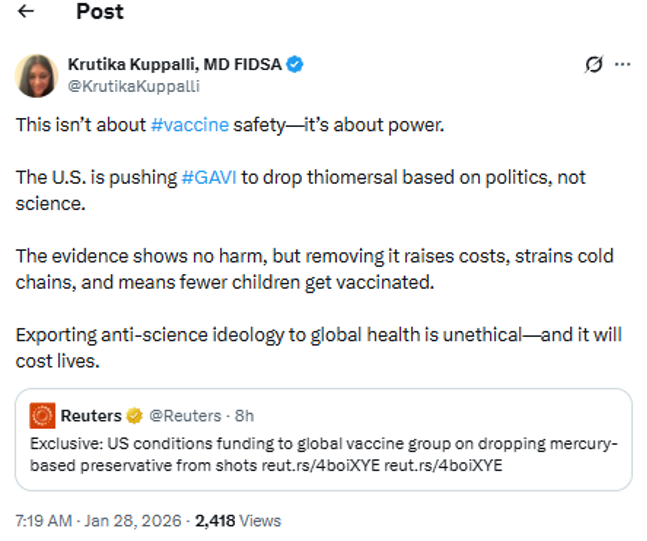
The organization poses as a savior of public health, yet it acts more as a referee of allowable thought among the public and its elected officials. IDSA’s anointed honorary Fellows (FIDSAs) lecture the American people constantly and arrogantly on social media and in the press, about why Americans making our own medical choices is an irresponsible and dangerous prospect. As recently as this week, FIDSAs even actively lobbied for the use of mercury-containing additives like thimerosal, that even the CDC, American Academy of Pediatrics, and the Public Health Service agreed in 1999 should be removed from vaccines due to safety concerns[1]. Their posts read like direct AI-generated pharmaceutical company messaging, and as we will see, for good reason:
Indeed, IDSA claims that it is composed of well-meaning and independent scientists who give their honest opinions about how infectious disease programs should be run, which drug should be prescribed, and how infectious disease should be tracked, managed, and prevented. This charity, we are told, has an independent, ethically run in-house journal CID, published by Oxford Press, which universities around the world subscribe to, and keep in their libraries. And academics and doctors, unpaid by IDSA but invited to their committees to do the actual guideline-drafting work, likely believe this is the organization’s primary role.
But as our investigation shows, this rosy description is a gross misrepresentation of a politically active pass-through organization for pharmaceutical industry dollars to directly influence clinicians, federal health bureaucrats, and academic researchers.
In fact, IDSA is currently a co-plaintiff with fellow trade-group and “charity” AAP and others, who are suing the Department of Health and Human Services for the alleged crime of responding to the American electorate by bringing the United States more in line with peer nations in terms of the childhood vaccination schedule[2]. What would bring them to that point of suing the HHS, rather than making their case scientifically in review meetings, or in the peer-reviewed literature, about the alleged safety and efficacy of vaccines?
IDSA Sells Professional Influence and Policy Control
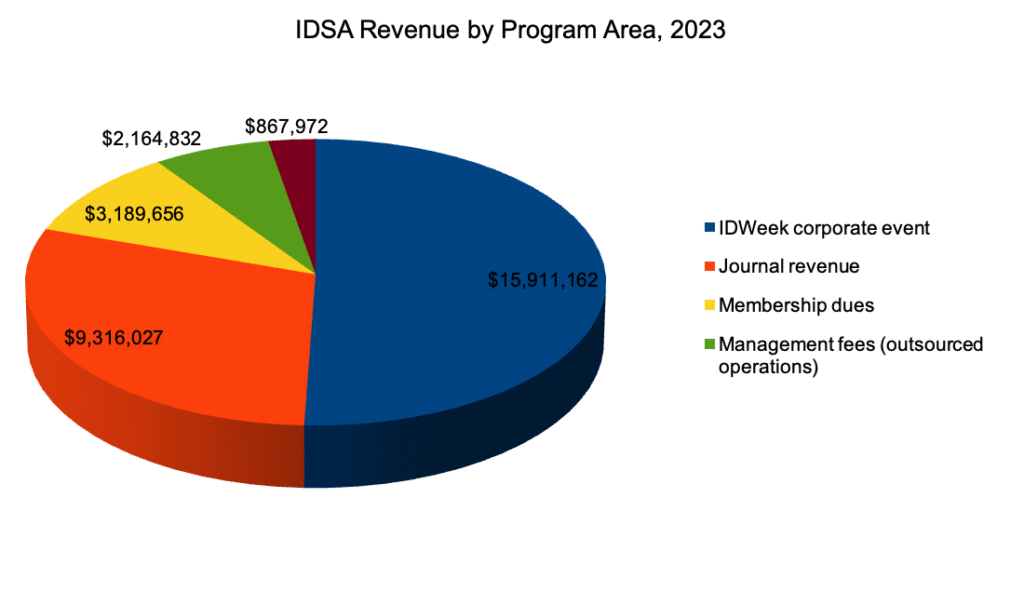
It should come as no surprise that IDSA’s largest revenue source by far is the pharmaceutical industry, but more startling is how brazenly and how efficiently it is collected. In fact, more than half of the organization’s revenue is raised in a few short days each year. IDSA’s IDWeek extravaganza is a scientific and industry conference with a substantial organizational purpose: specifically, a 4-day long transfer of $15 to $20 million dollars annually, directly from pharmaceutical companies to the guideline-making organization and its various initiatives for IDSA’s “services” provided during the event.
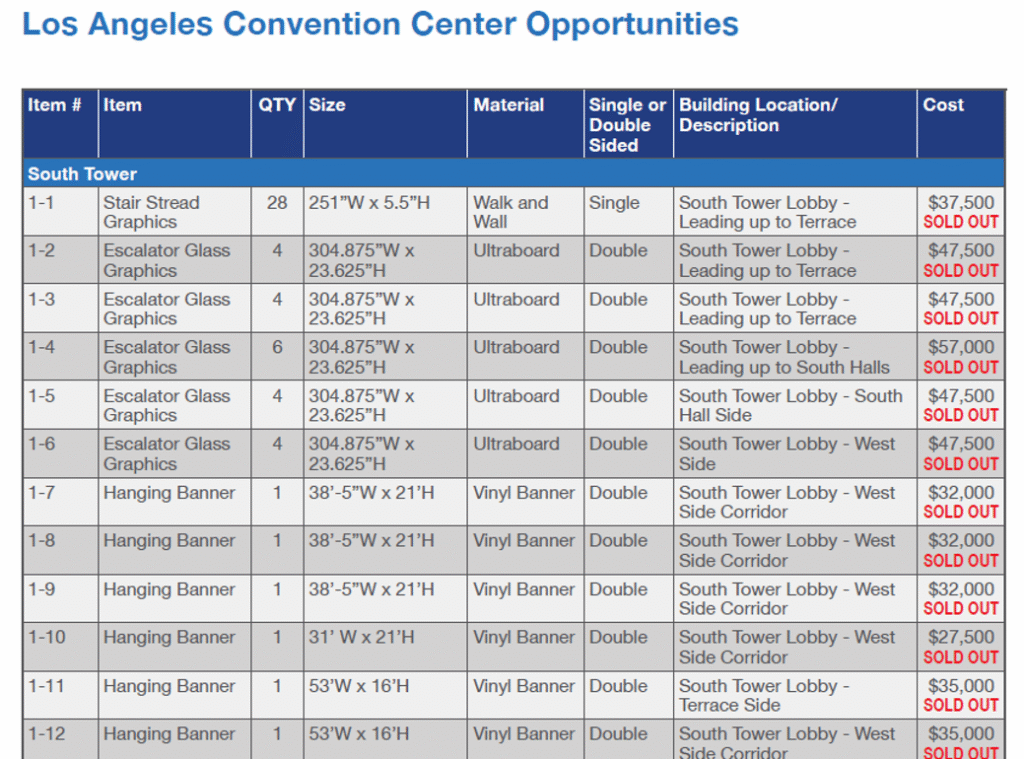
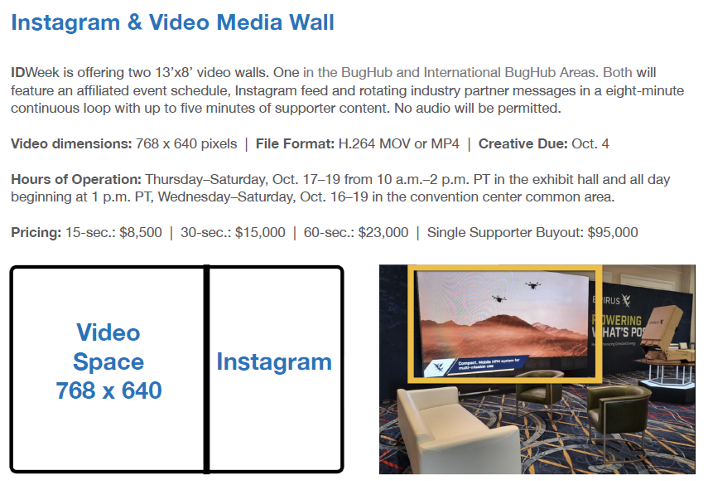
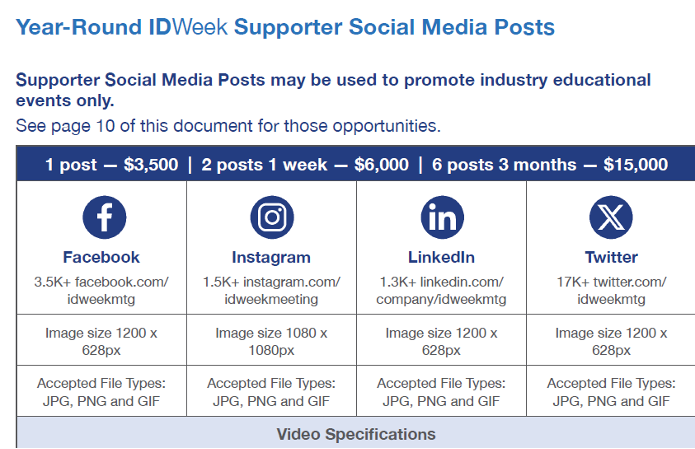
These services provided are clearly not charitable by any reasonable measure, as the revenue is almost entirely fees for display booths, corporate advertisements, and closed-door, private meetings (as described in the shocking Annex to this report at the end of this article). As a few examples: corporations can pay $90,000 to wrap the morning’s Wall Street Journal with an ad in attendee’s hotels for a single day, or pay $15,000 for a mere three posts on X from IDSA’s account, or pay $57,000 for three days of a graphic on an escalator. In the 2025 prospectus, “Sponsor Banner 4-4” seems particularly sought after: it can be unfurled for a mere $150,000 for the 4 days on the way to the concourse. If you’re a biotech company on a budget, for $30,000, your company’s name can grace the luxurious “seating cubes” present at the strangely chairless conference, or even five rocking chairs with your brand on them (“the perfect blend of comfort and visibility”).
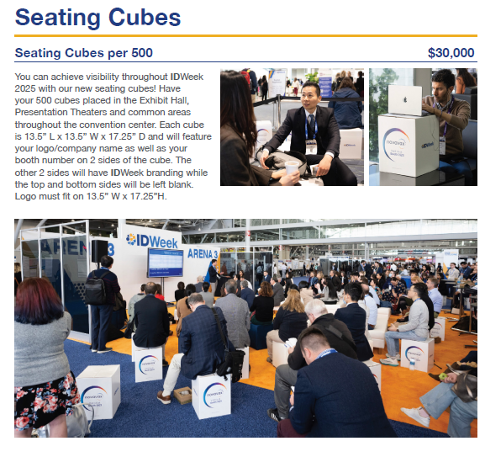
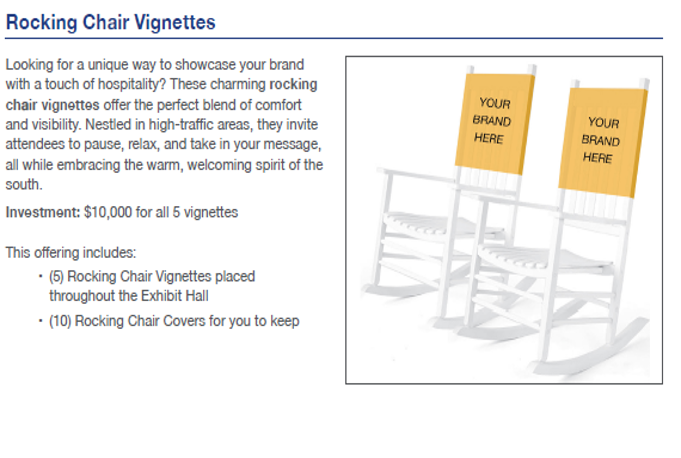
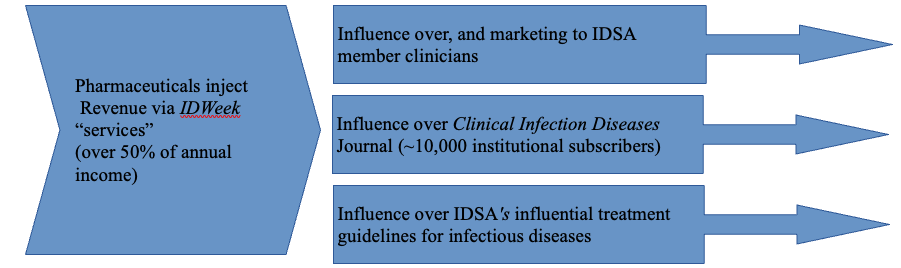
To be fair, this is likely all shrewd investment, as IDSA is an extremely influential “charitable” organization professionally, and in terms of public policy relating to infectious diseases. Clinical Infectious Diseases has over 10,000 institutional subscribers, an agenda-setting level of circulation. Furthermore, during COVID-19 in 2020, the CDC gave IDSA $1.1m to enter into a cooperative agreement to write complementary guidelines for treatment and management of the disease, to pair with the CDC’s own documents. This is one example of how IDSA is directly connected contractually to the US government’s health bureaucracy, and as such is a valuable mediator for pharmaceutical companies looking to expand beyond lobbying congress to more direct institutional capture and professional influence[3]. The influence is roughly purchased in the following ways:
Figure 1. Influence purchased for IDSA’s financiers
A Team Fit for Purpose
Like the AAP, the “charitable” IDSA paid its top executive an exorbitant salary of over $630,000 a year (as of two years ago). Today, the new CEO is a physician from New Jersey, but IDSA’s CEO over the previous 6 years was not a medical doctor, nor was he even posing as a public health authority. He was, more appropriately for the job, an expert at managing trade groups due to his time as an executive at the Equipment Leasing and Finance Association, and the Manufactured Housing Institute. These are both honest trade groups that to their credit, do not pretend to be charities.
An executive like this was clearly skilled at identifying policymakers, industry, and professionals in a given field and connecting them in a fruitful way for industry, so that revenue continues to flow from pharmaceutical and biotech firms, back into the organization.
While IDSA does convene outside clinicians to create its guidelines and treatment recommendations, IDSA provides a controlled environment to create a predictable output that will not endanger next year’s lavish gifts from industry. Why else would industry shovel millions in their direction each year?
Will These “Charities” Continue to be Tax Exempt?
At this point, IDSA needs its pharmaceutical donors even more than they need IDSA. Without IDWeek, the organization would be less than half its current size, its salaries would plummet, and it would have to focus on its journal and its members, something it is no longer built to do. Financially, member dues only account for roughly 10% of the organization’s revenues, so presumably accountability to members’ interests and needs is only roughly one fifth of IDSA’s accountability to industry financiers.
The pharmaceutical industry is of course eager for their infectious disease products to be promoted, favorably considered in treatment guidelines, and even mandated by the coercive vaccination schedule. IDSA is the perfect middle-man to exert that influence, and even achieve those goals directly on their behalf. However, IDSA provides direct business services to some of the most profitable companies in the world, and should not be considered a charity in any true sense of the word.
[1] https://www.cdc.gov/vaccine-safety/about/thimerosal.html
[2] https://www.idsociety.org/news–publications-new/articles/2026/court-rejects-hhss-motion-to-dismiss-lawsuit-brought-by-leading-public-health-groups-against-hhs-immunization-schedule-changes-acip-reconstitution/
[3] https://taggs.hhs.gov/Detail/AwardDetail?arg_AwardNum=NU50CK000477&arg_ProgOfficeCode=252
Annex: A Closer Look at IDWeek
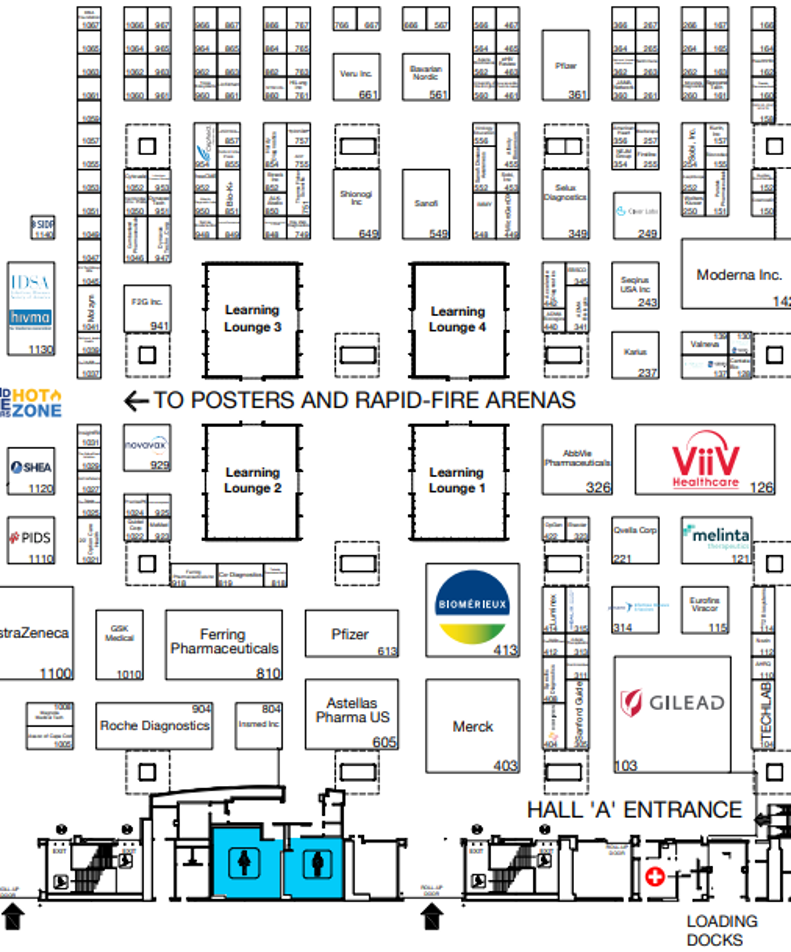
How does the pharmaceutical money reach IDSA if not by reportable, tax-deductible charitable donations? Absurdly, IDWeek revenues are mostly not considered donations at all, but rather fees for services. What are these services? They are irrationally-priced display booths, billboards, LED-screen displays, closed-door meetings, rocking chairs, seating cubes, numbering in the hundreds. The Average IDWeek seems to bring in between $15-20m per year according to recent financial filings under “annual meeting”.
Rather than look at the website or annual report, a far more effective and direct way to understand how this financial transfer happens is to look at the prospectus for attendee companies each year, which Health Freedom Defense Fund has secured. Some helpful imagery is below, with some examples of the services provided:
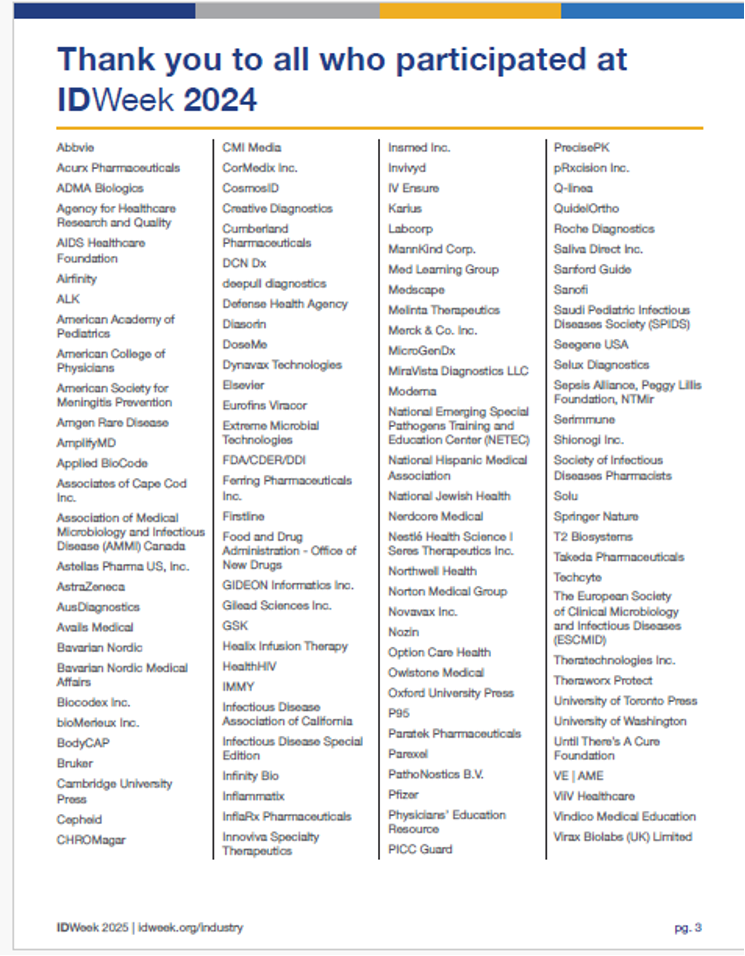
1. List of participants, 2024:
2. The map of the convention floor is informative of how much industry holds sway:
3. For only $95,000, a company can have a rotating message, without audio, for 4 days:
4. Social Media Posts. A company can secure 6 posts for $15,000:
5. 2025 IDWeek Prospectus, Pg. 13. Sample of banner costs, note the $150,000 and $60,000 banners:
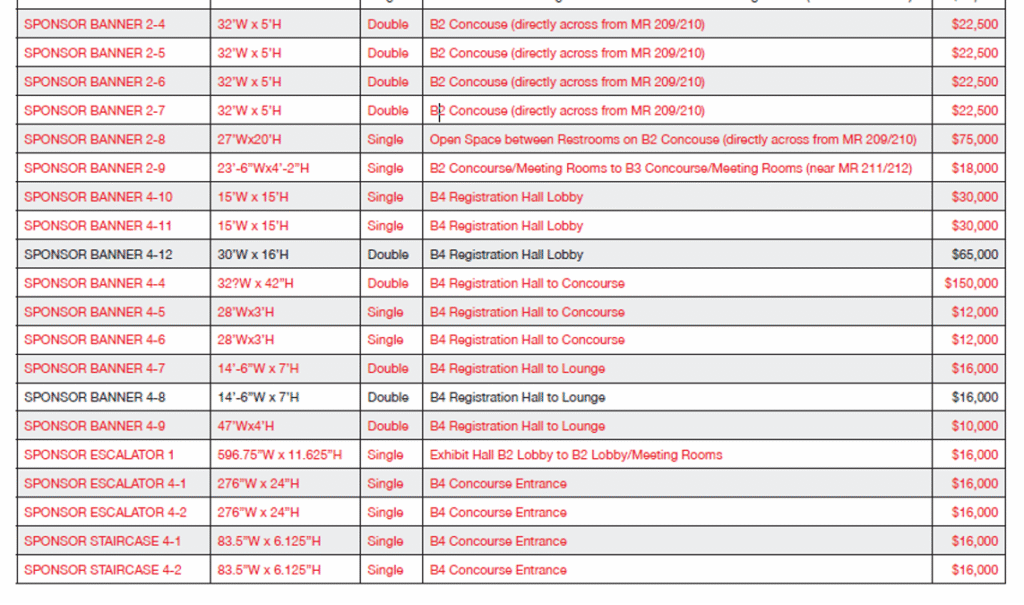
6. 2024 IDWeek Prospectus. In 2024, all such signage sold out: