Purchase Pharmaceutical Industry Influence
The press and media outlets have been subjected to a form of institutional capture by industry for decades now. The majority of corporate television media is dominated by pharmaceutical advertising dollars, with those companies spending roughly a half billion dollars a month to place advertisements.
There is a clear strategic implication of this campaign by the pharmaceutical industry to be the primary financier of traditional media outlets’ revenue streams. The financial leverage over television news programs (that still retain considerable agenda-setting influence in the national discourse despite dropping ratings) buys an obediently sympathetic voice for the industry should a scandal arise. It effectively prevents investigative reporting from even doing the preliminary work to uncover such a scandal in the first place.
As an example of the tremendous influx of cash from pharmaceutical companies to news programs, just one program, ABC World News Tonight With David Muir, received almost 15 million dollars from pharmaceutical advertisements in the month of March in 2023.[1] What would a rational outside observer conclude about a single news program’s willingness to speak ill of the industry that provides it with nearly 200 million dollars a year? Unless the program’s producers are eager to be fired by their corporate supervisors, one would assume that that news show will never bite the hand that feeds it in a meaningful way. Furthermore, whenever a dramatic press release related to one of the companies is released, the media is likely to positively frame it, and certainly not question it meaningfully.
But it’s not just television advertising that steers public perception., Pharmaceutical companies spend even more cash on digital advertisements. Marketing firms estimate that less than 30% of pharmaceutical advertising dollars go to traditional media like television, with over 70% going to the digital ad space like streaming services[2], optimizing ad placement to drive consumers to ask their doctors about the latest biologic or vaccine in between streaming movies and television shows. [3]
While this approach may (or may not[4]) work to drive revenue and/or share information, this is not the only avenue for influencing the public, and even scientists, to adhere to the industry’s priorities.
Beyond strategic advertising and regulatory capture, the pharmaceutical industry’s scientific agenda is maintained through pervasive conflicts of interest with academic researchers, lavish funding for conferences, and financial domination of scientific journals[5]. If the prospect of peer review is too daunting, researchers may even decide to ask their university to issue a press-release for a short abstract they share at a conference—and with the right corporate allies, that press release can go very far with the public, and a single, retrospective paper can convince the academics, despite their training.
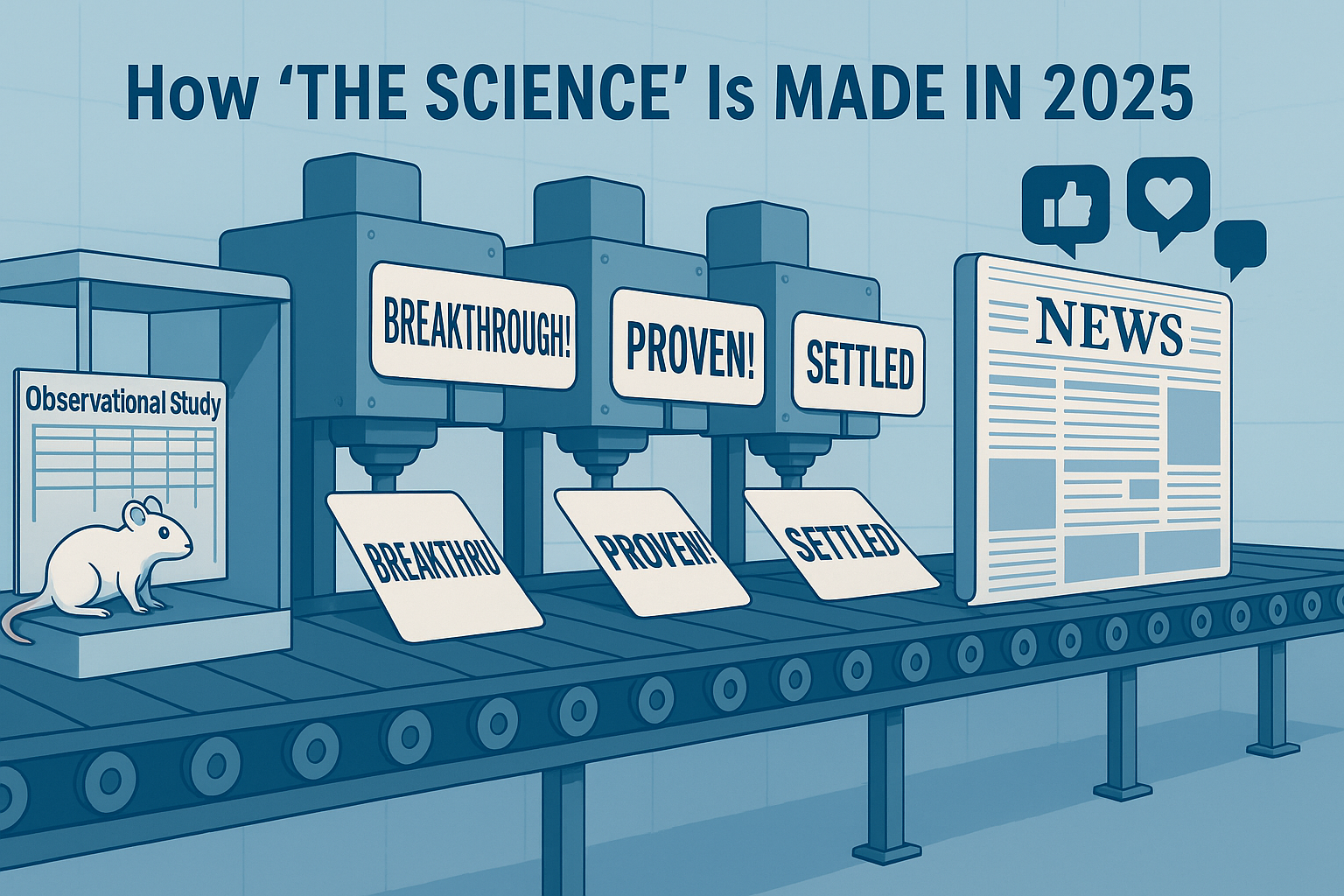
To illustrate how one claim makes its way from a corporate-funded conference to the public’s ear, the following is an example of how information is laundered through the conference world, academic press offices, and science wire services to drive public perception down to the social media level. This example shows how the process works smoothly to share claims that if true, would benefit the funders and conflicted scientists alike, eventually sounding like an authoritative, earth-shattering scientific claim by the time it reaches the public.
Present a Hypothesis as a Proven Fact: Press Releases Claim that mRNA Vaccines Increase Cancer Survival Time
On October 20th, 2025, a major account on X (Scott Adams, author of the Dilbert comic strip) with over 1.2 million followers, responded to a post which quoted a press release verbatim. It comes from Sciencedaily.com, which breathlessly reports that “[a] groundbreaking study reveals that cancer patients who received a COVID-19 mRNA vaccine within 100 days of starting immunotherapy lived dramatically longer than those who didn’t.” It is a stunning claim requiring iron-clad evidence of this suggested causality, and the mechanism of action at play in human subjects.
This claim was also copied word-for-word from an original University of Florida press release on all the major science wire websites, which are mostly for-profit clearinghouses that take placement revenue from universities to replicate and distribute press releases, and/or they are funded from direct advertisements. They mostly have no editorial standards, or obligation to review the scientific claims they receive.
Multiply the Message Among the Public
In this case, by the time these claims reached the public, it had achieved an aura of scientific authority, even as the authors admit in the fine print that they can make no causal claims. Using emotional and exciting language like “dramatically longer”, “groundbreaking”, evidence being “revealed” creates in the casual reader a presumption of scientific rigor through sheer magnitude. This goes a long way with most readers to cement in their mind that these claims are based in hard evidence.
Even so, some readers may indeed be skeptical, and many were. Scott Adams is uniquely positioned to opine on this story—as a current cancer patient and before that, an mRNA vaccine recipient, his short, skeptical opinion on the claim is understandably: “Well, maybe. Maybe not.”
But across the internet the reaction among physicians was in large part to accept this claim wholesale and celebrate it, or use it to ridicule those that are opposed to forced medicine and vaccine mandates. However, if one looks into a specific claim like this one, like so many others that come out every day, the reality is far from the press release.
This “study” is hardly the result of doctors and statisticians in the lab discovering breakthrough mechanisms of survival (as the moody in-house photo [6]in the press release would suggest), this is a non-rigorous claim based on a 10-minute presentation at an industry-funded conference in Germany, with no backing documentation beyond a 1 page summary, almost no available data, or firm claims of causality (details would come three days later in the journal Nature). In terms of its methodology, it is a retrospective, or backward-looking study, a very limited approach to data collection usually reserved for rare diseases, and otherwise to learn basic lessons in resource-poor research settings. It is universally accepted in academic research that observational, retrospective methods are used as a way to generate ideas or suggest hypotheses, but not to prove them one way or another.
The event where the short summary of the research was shared and discussed took place in Germany, and it has a website which features its corporate sponsor larger than its own logo:

Accessed 10/20/2025: https://cslide.ctimeetingtech.com/esmo2025/attendee/confcal
A 2023 study in the Journal of the American Medical Association (JAMA) found that 9 out of 10 doctors that positively mentioned or endorsed a drug or medical device on their social media accounts were paid by pharmaceutical companies, with an estimated $2.46 billion going to physicians in the US in 2022 alone from the sector.[7] The average physician received just under $30,000 in that study.
Leverage the Journals
This claim of vaccination somehow modulating the immune system is based on a rather basic concept that the immune response from vaccines may create both specific and non-specific immune effects.
This is not based on any original or “groundbreaking” scientific idea, as many mainstream scientists have long considered and argued that non-specific immune responses from many classes of vaccines[8] may cause general immune training (or damage) in ways that affect non-target disease areas, or impact the person’s underlying health writ large[9]. The unpredictable nature of the body’s response from intramuscular injection is a driver of this difficulty predicting what will happen with vaccination. Additionally, both acute infectious disease and vaccination cause the immune system to go “hot” and to activate in ways that are unpredictable and require extremely careful techniques to assess—observational, retrospective clinical records analysis is not one of those methods.
The reason these kinds of claims are rarely so loudly trumpeted in peer-reviewed journals is the unique difficulty of proving a causal link from such an immune system shakeup, one way or another without controlled, carefully executed clinical trials free from bias and carefully adjusted for confounding variables. However, standards have dropped since 2020, when peer review time was sharply shortened for “emergency” pre-print studies, with predictable results in terms of quality. Combined with this is the overwhelming financial dependency of the top tier medical journals, which leads to a situation where low quality studies, by the journals’ own standards, are increasingly published.
These types of experimental studies almost never happen in modern vaccine “science” due to claimed “ethical” objections to anyone not receiving a vaccine, due to the alleged immediate dangers from lack of claimed protection. It is a self-policing principle that vaccines are safe and only helpful, and that assumption cannot be questioned rigorously with a control group because again: vaccines are safe, and only helpful.
So due to these questionable claims, we are left with “retrospective studies” which are an oxymoron in terms of rigor—a researcher cannot mindfully “launch” a study after the data has been collected. They can only collect what has already been collected. They can help identify areas of future investigation, but it is considered one of the lowest forms of scientific research, and by definition cannot establish causality. Even in the dry words of researchers published in the Journal of The Royal College of Surgeons in Edinburgh, “Researchers should avoid over generalization of results and be cautious in claiming cause-effect relationship in retrospective studies”.[10] Researchers know this, and are quick to dismiss retrospective studies when it doesn’t suit their preferences (for example when they show potential harm from vaccines) but somehow forget these objections when a retrospective study claims that an mRNA vaccine most doctors recommended to their patients with little or no basis, might be miraculously helpful for cancer patients. It is a path to redemption for many physicians and researchers to believe this is true, and so they have temporarily set aside their skepticism of such studies.
However, even if peer reviewers have qualms about allowing such a basic form of research to claim the the mRNA injection “sensitizes” tumors (an action verb that directly suggests causation), they are paid to think otherwise. Peer reviewers at major journals are mostly paid by pharmaceutical companies and medical device companies, according to rigorous research, again in JAMA Pharmaceutical companies paid peer reviewers at medical journals- (over 58% of the peer reviewers analyzed based on public information), who take on average over $7,000 over two years (2020-2022) from pharmaceutical companies and device companies[11].
Drive Traffic and Funding
This cycle is self-fulfilling, in that media attention leads to clicks from the general public on their articles, which drives advertising revenue for their websites. This is increasingly true the more controversial and bombastic the claim, as it is in other areas of media.
At the same time, this approach can lead to higher citation counts, as other researchers argue with the questionable findings and cite the original piece. A higher citation count for published articles is a constant goal of top tier scientific and medical journals as it increases their “impact factor” in relative terms with other journals.
Therefore, the incentives for medical and scientific journals are directly aligned to continue this trend of pushing hypotheses as fact, and mere speculation as a breakthrough. It drives more revenue and attention, but also more scientific engagement, regardless of the veracity of the original claim. One can expect this trend will continue for a long time to come.
detailed review: a look at the nature “study” design: a retrospective records review of cancer patients mixed together with mouse studies
Detailed Review: A Look at the Nature “Study” Design: A Retrospective Records Review of Cancer Patients Mixed Together with Mouse Studies
The Abstract Sets the Stage
So, what are the study and methods that justified this breathless press release and such fawning press coverage? NBC news informed us the “cancer fighting mRNA vaccine may already be here”[12]! What a delight for industry, that the mRNA vaccine for Sars-Cov2 happens to be part of a cancer cure as well. Specifically, they claim that “receipt of SARS-CoV-2 mRNA vaccines within 100 days of initiating ICI [immune checkpoint inhibitor treatment for cancer] is associated with significantly improved median and three-year overall survival in multiple large retrospective cohorts”.[13]
However, upon investigation in this case, apparently none of the science wires or news reports released what one would think would be most important for “The Science” to be valid: a link to the abstract. After a considerable search, the brief documents could be found here. The documents contain far more sober language than the press releases and news reports but still make short but broad claims of mechanistic action based on thin background research: researchers apparently “utilized mouse models and samples from healthy (ed: non cancer patients) human subjects for mechanistic studies”.
So even as the press services were running with their miraculous headlines, no further information was available on the details of the study on October 20th other than a backward-looking records review of people who had certain types of cancer, a “mouse model” study, and human sample research of some unspecified kind.
A “groundbreaking study” suggests to the public a rigorous, experimental design—but from the limited information shared, this was merely an observational records review paired with some form of mouse research, and as the press release itself states legalistically mid-way through, “these results are from an observational study and require confirmation through a randomized clinical trial”, despite the language throughout. In the NBC report (at the end of the article of course) a physician from Dana Farber Cancer Institute dryly noted: “We have been misled by retrospective studies before,” in warning the public not to celebrate too soon[14].
A Conflicts Section to Remember
One of the first things to look for in a short abstract link like this one is the conflicts section, to understand why a press release might make bold claims without substantial evidence. Shouldn’t we know something about the financial interests of the authors and scientists, who say things like “[t]he implications are extraordinary—his could revolutionize the entire field of oncologic care,” in the press release?
Amusingly, the disclosure section, seen at the end of this piece as Supplemental 1., is as long as the rest of the research summary document combined (background, methods, results, conclusion, and funding sections) and is an impressive list of intellectual property and patent ownership of RNA and mRNA technologies, pharmaceutical speaking and consulting fees, board memberships, and financial entanglements. None of these necessarily indicate individual wrongdoing, but the conflicts are listed for a reason: they may bias a researcher and for that reason should be shared up front. Credit to the German conference for at least requiring this disclosure.
Also, to the credit of the University of Florida press release authors, they do admit at the end, in case any members of the general public make it that far: “Sayour, Grippin and Mitchell hold patents related to UF-developed mRNA vaccines that are licensed by iOncologi Inc., a biotech company born as a “spinout” from UF (University of Florida) in which Mitchell holds interest.” This is a full-spectrum conflict which includes corporate benefit, academic-spin offs, and personal gain—this should be clearly stated to underscore this information as more of an advertisement than a news piece.
Technical Review of Methodology in the Nature Paper
The paper claims that cancer patients who enrolled between 2015 and 2022 for treatment with immune checkpoint inhibitors (ICIs) who took the covid-19 mRNA vaccine had improved overall survival times and progression-free survival compared to those that didn’t.
First, for context, it should be noted that this was the first retrospective clinical review paper in Nature in 8 years, presumably for a reason.[15] The paper in 2017 was focused on an exceptionally rare cancer where a proper study could not feasibly be set up. That was an appropriate use of a retrospective study approach, from almost a decade ago.
It is wildly irregular by the standards of highly rated medical research journals to infer or imply causality from a records review, whether or not it is paired with mechanistic mouse studies. It is well-understood that a records review is among the least rigorous types of observational investigation that can even remotely be termed a “study”. It can suggest mechanisms of action but is never used as proof of such.
In this case, that means the team just looked at the cancer patient data AFTER it had been collected, and looked for what they could find in three basic statistical programs of limited value with inadequate adjustments for confounding variables driving outcomes (they conceal most of the details but claim to have done the adjustments). This is work that any capable research assistant could do and does not mean there is a causal relationship at play. Exploratory fishing through data sets like this happens every day in every research university hundreds of times over, and simply does not warrant a press release, much less a paper in Nature—nor claims of groundbreaking research.
This paper also has many technical issues with how the authors “control” for other causes of successful treatment for cancer, like underlying obesity, mental health, and people with autoimmune disease. They also use large chunks of time to study changes by year, rather than monthly or quarterly results, which is leads to less useful data that is more open to creative interpretation.
Weak statistical methods employed to make an explosive claim: the devil is in the details
Statistical methods are necessarily limited in a retrospective records search. Even with much adjustment and correction the authors have claimed to make to mitigate those limitations, they provide no detail in terms of HOW they did those adjustments in terms of granular detail.
Upon close review, none of these questions were answered adequately:
What was the underlying health of the two groups that were investigated—vaccinated vs unvaccinated just during the last 100 days—was there “healthy user bias”? The authors claim they controlled for co-morbidities using the Charlson Comorbidity Index (CCI), which:
does not include autoimmune disease (e.g. those who likely didn’t get the vaccine, which would skew results toward better survival for those that took it).
does not include obesity (the word is not mentioned in the paper) which is a known driver of death during this period.
does not include frailty (FFI), another known driver of death—if the average vaccinated patients were less frail on average in late 2021 vs early 2021 (a year when many of the very elderly passed away in record numbers), this would skew the data toward looking like the mRNA vaccine helped them.
does not include mental health/depression, which drove poor adherence to clinical schedules, drove down care quality, and had no in-person social services.
The authors do not specify how they corrected for “immortal time bias” but just insist they did so, without detail. That phenomenon can artificially show more survival benefit for those that merely had more opportunities to receive the shot within the 100-day window, which is likely when you compare early 2021 to late 2021, as people emerged from their homes and isolation. Neither does the study reflect the fact that there was more care and supportive care, as well as less appointment cancellations, in late 2021 vs early 2021. Patients were admittedly treated differently during the early lockdown days of 2021 vs late 2021 on (hospitals functioning again). The authors assume no in-year changes with their method. MD Anderson was effectively closed to “non-urgent” ICI cancer treatment patients [16] early in 2021, perhaps mostly accepting more obese, less-vaccinated (due to phased roll out), and more “urgent” and complex clinical cases. This would also drive an illusion of longer survival. The authors should provide:
Year by year and quarterly (during 2020 and 2021) balance or distributions and tests
Model outputs for year
Detailed “era” subgroup results
Code/Data to verify this
All of the above questions would need to be answered by any genuine medical journal’s editorial staff before triumphant announcements such as this reach the public dressed up as “The Science”, either in a press release, or in Nature. As it is, this “research” is already being cited somehow in other journals within hours, and widely integrated into the online medical discourse as a major breakthrough just this week, despite these obvious limitations. One can only imagine more rigorous lifetime researchers being stunned and jealous that a thinly-sourced press release strategy, paired with a retrospective clinical review, has somehow captured the attention of the science press and the public. But it reflects what many in medicine want to be true, not necessarily what is rigorously proven.
Technical Note: A Very Different Discovery Regarding Cancer and mRNA Injections
In this case, giving the benefit of the doubt that the authors’ claims are true, is not as reassuring as one would hope.
It should be noted that the effect of mRNA Sars-Cov2 and other spike protein-derived injections may be quite damaging in terms of cancer for many individuals, and the research supporting that theory is grounded in logic and rigorous evidence, and even embraced, perhaps inadvertently, by the authors of the Nature paper focused on immune checkpoint inhibitor (ICI) treatment for cancer[17].
The authors admit there is significant altering of the immune system environment around a tumor after taking the mRNA spike vaccine, but they only look at it as it relates to those who RECEIVE the ICI treatment (at most 20,000), not all the cancer patients who don’t get it (18+ million in the U.S. alone).
For context, many studies have detected free-floating spike protein (not from infection) in plasma years after injection[18]. Consider then that it is broadly established in mainstream medicine that the spike protein drives a “cytokine storm”, which upregulates and sustains elevated PD-L1, a cancerous tumor’s defensive protein, as tumors fight back[19].
PD-L1 is an immune checkpoint protein that inhibits[20] T-cell activity and promotes immune evasion and tumor growth, causing cancer progression and worsening for 2-4 weeks in most studies. But the more PD-L1, the more “ready” the tumor’s environment is for ICI treatment against the protein, according to oncologists ready to act. But what about those people with various cancers that do not have access to, or prefer not to undergo, ICI? What about those whose tumors are undetected at all? What damage has the mRNA injection done by starting an immune battle that results in more PD-L1, and therefore a more effective defense for tumors?
Amazingly, with this solitary focus on ICI treatment, the authors in the Nature paper, in their rush to trumpet how mRNA vaccines and ICI treatment work together, say directly “RNA vaccines amplify PD-L1 in non-small cell lung cancer” and “RNA vaccines amplify tumour PD-L1 broadly”. This focus ignores the altered fate of all those with known or unknown cancer who took the mRNA injection and did NOT receive this ICI treatment.
In addition to this pathway of potential damage, any other effects due to spike protein proliferation, are also in desperate need of careful research. The stakes are high. One Yale study group looking at post-vaccination syndromes found spike protein persisting more than 700 days after the most recent dose[21]—the potential for damage is therefore extremely concerning for those with persistent spike protein from the vaccine, and this would contradict this latest study. Other studies found spike protein that is NOT from disease (no nucleocapsid) up to 17 months later in recipients[22]. This possibility of damage, though grounded in mainstream scientific inquiry and backed by empirical data including the nature paper, seems somehow a less popular topic on the science wires, corporate conference schedules, and corporate media news feeds. Because it is messy, complicated, and potentially incriminating for pharmaceutical companies and the journals that published their rushed findings uncritically over the past 5 years.
Jumping On the Playbook Bandwagon—This Time with a Shingles Vaccine
Indeed, the quick pathway from a conference summary document to a dramatic press release has proven to be an effective technique to generate excitement about absurdly positive results of off-label, post-vaccination effects. Just days after this claim about mRNA injections and cancer outcomes, another conference summary’s[23] results appeared on the science wires and news sites, this time claiming that the shingles vaccine can possibly reduce dementia, heart attack, stroke, blood clots, and even delay death.
This time, a company executive led the research and wrote the summary himself, cutting out the “academic” middle man. There was no Conflicts section on the abstract summary to inspect. The document was turned into a press release from the Infectious Diseases Society of America, which receives considerable corporate funding[24]. This time it was a review of observational studies with one clinical trial thrown in—the author/GlaxoSmithKline executive Charles Williams helpfully and legalistically noted at the end of one press story that “almost all studies included in the analysis were observational and can’t be used to infer causality.”[25] This is a media management trend that will continue if unchecked by professional standards and public skepticism.
Moving Forward in a World of Opportunistic Hype for Observational Studies
In the case of the mRNA vaccine and cancer treatment, it is sadly unsurprising that academic researchers who are deeply involved financially with the commercialization of mRNA technology would seek to promote the idea that the injections, which can generate uncontrolled spike protein production, are somehow extending the lives of cancer patients, without hard experimental evidence.
It is unsurprising that the very peer review journals like Nature that rely so heavily on pharmaceutical funding for the majority of their revenue, and whose reviewers more often than not receive direct payments from pharmaceutical companies, would publish a retrospective clinical records review that claims one of the highest-earning pharmaceutical products of all time somehow also provides miraculous off-label benefits.
It is unsurprising that any given medical pundit, who staked his or her reputation on the mRNA shot being safe and effective, would be grasping to the hope that this claim is true—not only for their own professional reputation, but for the sake of their own conscience.
But for the universities’ department heads, or conference organizers, among science wire administrators, and certainly peer reviewers, there should be some standards and clear financial separation between them and the companies profiting from these drugs and devices. A methodologically weak paper, and a sensational accompanying press release should not be used to transmit a false but profitable hope, that getting one more covid booster will predictably result in a better chance against cancer.
Supplemental 1.
Disclosure
A.J. Grippin: Financial Interests, Personal, Invited Speaker: Alamar Biosciences; Financial Interests, Personal, Other, Scientific Advisor: Sift Biosciences; Other, Other, Inventor on patents related to RNA therapeutics.: The University of Texas MD Anderson Cancer Center; Other, Other, Inventor on patents related to RNA therapeutics: University of Florida. P. Sharma: Financial Interests, Personal, Other, Consulting or Stock Ownership or Advisory Board: Achelois, Adaptive Biotechnologies, Phenomic AI, PBM Capital, Oncolytics, Marker, Lytix, Lava Therapeutics, Polaris Pharma, JSL Health, Infinity Pharma, ImaginAb, Hummingbird, Glympse, Earli, Dragonfly, Catalio, BioNTech, BioAtla, Apricity, Sporos, Time Bioventures, Venn Biosciences; Financial Interests, Personal, Advisory Board, Consulting or Stock Ownership or Advisory Board: Akoya Biosciences, Asher Bio, Candel Therapeutics, C-Reveal Therapeutics, Dragonfly Therapeutics, Enable Medicine, Henlius/Hengenix, Matrisome, Neuvogen, NTx, Osteologic, Soley Therapeutics, Spotlight, Trained Therapeutix Discovery, Two Bear Capital, Vironexis, Xilis Inc. J. Zhang: Financial Interests, Personal, Invited Speaker: BeiGene, Johnson and Johnson, Roche, Takeda, Varian; Financial Interests, Institutional, Other, Trial support: Merck; Financial Interests, Personal, Advisory Board, Also supports trial: Novartis, Helius; Financial Interests, Personal, Advisory Board: Oncohost; Financial Interests, Institutional, Other, Supports trial: Summit. J. Wargo: Financial Interests, Personal, Invited Speaker: PeerView; Other, Other, J.A.W. is an inventor on a US patent application (PCT/US17/53.717) submitted by the University of Texas MD Anderson Cancer Center which covers methods to enhance immune checkpoint blockade responses by modulating the microbiome: University of Texas MD Anderson Cancer Center. J. Heymach: Financial Interests, Personal, Advisory Board: Genentech, Mirati Therapeutics, Eli Lilly, Janssen, Boehringer Ingelheim, Regeneron, Takeda, BerGenBio, Jazz, Curio Science, Novartis, AstraZeneca, BioAlta, Sanofi, Spectrum, GSK, EMD Serono, BluePrint Medicine, Chugai, BioNTech; Financial Interests, Personal, Principal Investigator, International PI for clinical trials: AstraZeneca, Boehringer Ingelheim; Financial Interests, Personal and Institutional, Other, Developed a drug: Spectrum; Financial Interests, Personal, Research Funding: Mirati, Bristol Myers Squibb; Financial Interests, Personal, Coordinating PI: Takeda; Financial Interests, Personal, Licencing Fees or royalty for IP: Spectrum; Financial Interests, Personal, Full or part-time Employment: The University of Texas MD Anderson Cancer Center. H. Mendez-Gomez: Financial Interests, Personal, Licencing Fees or royalty for IP: iOncology. E. Sayour: Financial Interests, Personal, Licencing Fees or royalty for IP: iOncology; Financial Interests, Personal, Advisory Role: Siren; Financial Interests, Personal, Advisory Board: Nature’s Toolbox, iOncology; Financial Interests, Personal, Stocks or ownership: NTx Bio. S.H. Lin: Financial Interests, Personal, Research Funding: BeyondSpring Pharmaceuticals; Financial Interests, Institutional, Research Funding: Nektar Therpaeutics; Financial Interests, Personal, Other: XRAD Therapeutics; Financial Interests, Personal, Advisory Board: AstraZeneca; Financial Interests, Personal, Invited Speaker: Varian Medical Systems; Financial Interests, Personal, Full or part-time Employment: The University of Texas MD Anderson Cancer Center; Financial Interests, Personal, Ownership Interest, Co-founder and scientific advisor: Seek Diagnostics; Financial Interests, Personal, Research Grant: STCube Pharmaceuticals; Financial Interests, Personal, Leadership Role, Co-chair RTDT Committee: NRG Oncology. All other authors have declared no conflicts of interest.
[1] https://www.adweek.com/adweek-wire/ispot-data-reveals-just-how-much-pharma-brands-are-spending-on-tv-advertising/
[2] https://www.emarketer.com/chart/268443/healthcare-pharma-spend-greater-share-of-total-media-ad-spending-on-traditional-channels-than-any-other-industry-measure-2024-of-total-media-ad-spending
[3] https://www.fiercepharma.com/marketing/pharma-passes-tech-climb-2nd-place-ad-spend-leaderboard-amid-boom-digital-promotions
[4] https://pmc.ncbi.nlm.nih.gov/articles/PMC3278148/
[5] https://pmc.ncbi.nlm.nih.gov/articles/PMC1126057/
[6] https://medicalxpress.com/news/2025-10-covid-mrna-vaccine-immune-response.html
[7] https://jamanetwork.com/journals/jama/fullarticle/2819356
[8] https://www.elsevier.es/en-revista-allergologia-et-immunopathologia-105-articulo-bcg-as-game-changer-prevent-infection-S0301054620301063
[9] https://www.nature.com/articles/s41598-023-28295-8
[10] https://pubmed.ncbi.nlm.nih.gov/33469615/
[11] https://pmc.ncbi.nlm.nih.gov/articles/PMC11539007/
[12] https://www.nbcnews.com/health/cancer/cancer-fighting-mrna-vaccine-may-already-rcna238197
[13] https://www.nature.com/articles/s41586-025-09655-y#Abs1
[14] https://www.nbcnews.com/health/cancer/cancer-fighting-mrna-vaccine-may-already-rcna238197
[15]The most recent clinical records review article prior to the mRNA paper is “Retrospective analysis of 2,000 patients with cutaneous T-cell lymphomas treated with extracorporeal photopheresis,” published in Nature on July 20, 2017.
[16] https://pmc.ncbi.nlm.nih.gov/articles/PMC8158401/
[17] https://www.nature.com/articles/s41586-025-09655-y
[18] https://academic.oup.com/cid/article/74/4/715/6279075
[19] https://pubmed.ncbi.nlm.nih.gov/36245120/ Loacker L, Kimpel J, Bánki Z, et al. Clin Chem Lab Med. Increased PD-L1 surface expression on peripheral blood granulocytes and monocytes after vaccination with SARS-CoV-2 mRNA or vector vaccine 10.1515/cclm-2022-0787 (2023)
[20] https://www.frontiersin.org/journals/immunology/articles/10.3389/fimmu.2022.831763/full
[21] https://www.medrxiv.org/content/10.1101/2025.02.18.25322379v1
[22] https://www.sciencedirect.com/science/article/pii/S096758682500195X
[23] https://d1ukaf53hjlapf.cloudfront.net/abstract-book-content/ESC2025/34242220250228145032_2.jpg (click “read the abstract” and note the author’s affiliation is GSK)
[24]https://www.idsociety.org/about-us/industry-relations “To advance IDSA’s mission, the Society accepts outside support and engages in collaborative efforts with industry, most notably pharmaceutical and diagnostic companies. “
[25] https://www.cidrap.umn.edu/misc-emerging-topics/shingles-vaccine-linked-lower-heart-attack-stroke-risk