Visit our Re-post guidelines
At a certain point, even the most persuasive horror story must escalate into a clear and present danger; otherwise its shock value and sense of terror inevitably fade. Ebola could not stay in Africa indefinitely and still feel like a visceral threat to Americans. To truly frighten the public, it had to make a domestic landing, and according to media reports, it did just that in September 2014.
Thomas Eric Duncan- “Patient Zero” and the Dallas ICU Onslaught
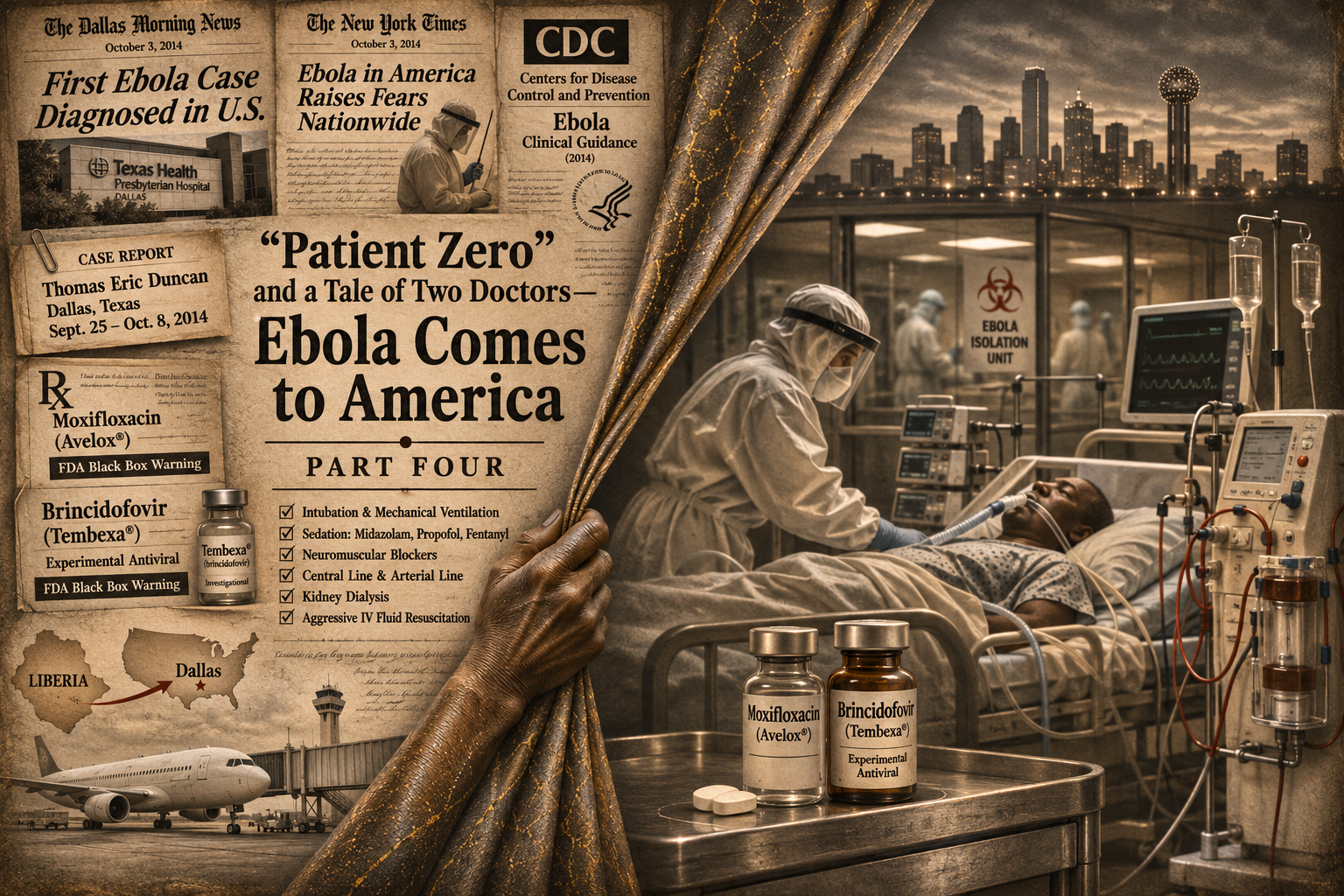
On September 25, 2014, Liberian traveler Thomas Eric Duncan visited the emergency room at Texas Health Presbyterian Hospital in Dallas, reporting a high fever, headache, and abdominal pain. Duncan was diagnosed with a sinus infection and discharged with a prescription for oral antibiotics. A nurse noted his recent trip from West Africa.
Crucial information surrounding the rapid decline of Thomas Eric Duncan was ultimately overshadowed by the coming media firestorm, which would hype Duncan as the first diagnosed Ebola patient in the United States. Had the detailed records of his initial visit been carefully scrutinized, they might have prompted a deeper investigation into the accuracy of his diagnosis and the medications he was given.
According to unsealed medical records, the emergency room physician prescribed Duncan a 10-day course of moxifloxacin (400 mg daily), a broad-spectrum fluoroquinolone antibiotic sold under the brand name Avelox. Moxifloxacin is known to have multiple side effects, including nausea, diarrhea, headache, and dizziness, and carries an FDA Black Box warning due to disabling and potentially permanent adverse events. These include musculoskeletal issues, permanent peripheral neuropathy, severe central nervous system effects, and acute organ risks. Because of this toxicity, the FDA advises it only be used when no alternative treatments are available.
Duncan’s condition rapidly worsened, prompting his return via ambulance on September 28, when he was immediately placed in strict isolation. On September 30, a PCR test, ordered and handled by the CDC in coordination with Texas state laboratories, “officially” confirmed he had Ebola. As his condition deteriorated, his medical team, in coordination with drug manufacturer Chimerix, scrambled to find a solution. On October 4, Duncan became the first Ebola patient treated with Chimerix’ experimental antiviral drug brincidofovir (brand name Tembexa).
Brincidofovir carried its own severe risks. It was originally developed for cytomegalovirus (CMV), but Chimerix was forced to halt development due to safety failures in human trials, such as the Phase III SUPPRESS study, where patients taking the drug suffered a significantly higher rate of death compared to a placebo. Because of its severe gastrointestinal toxicity, brincidofovir, like moxifloxacin, also carries an FDA warning. As Duncan was progressing towards multiple organ failure, doctors compressed the standard 7-day FDA dosing interval of brincidofovir into just 3 days in a desperate attempt to save his life, administering the final dose on October 7, just one day before he passed away. By condensing the schedule, doctors effectively delivered a highly concentrated exposure to an unapproved drug that later received an FDA Black Box warning for increased mortality risk.
After the initiation of the antiviral, Duncan was then placed on a mechanical ventilator. To keep him sedated and manage the breathing tube, doctors administered infusions of midazolam, propofol, and fentanyl. Temporary neuromuscular blockers were used during intubation to paralyze his airway muscles and prevent coughing in order to minimize the risk of bodily fluids getting sprayed on medical staff. Doctors also intermittently used Precedex (dexmedetomidine) to keep him calm without depressing his respiratory drive.
On October 5, doctors inserted a central line into Duncan’s groin for fluid tracking and blood draws, alongside an arterial line for real-time blood pressure monitoring. Along with his intubation, Duncan underwent continuous kidney dialysis, aggressive IV fluid resuscitation, and blood-pressure-supporting medications. These intensive fluid management and dialysis protocols represented uncharted territory for US Ebola treatment, sparking controversy by directly clashing with established global standards.
To stave off shock, Duncan was given massive volumes of intravenous crystalloids, a treatment known to drastically alter the body’s fluid balance, blood chemistry, and organ function, which can trigger a cascade of devastating physiological consequences.
As his organs began to fail, his vascular system could no longer retain the liquid. The infused fluids leaked heavily into his surrounding tissues, triggering profound, whole-body swelling and dangerously flooding his lungs. Tragically, Duncan passed away at 7:51 a.m. on October 8, 2014.
From a critical perspective, an argument can be made that the aggressive medical mismanagement Thomas Eric Duncan received at Texas Health Presbyterian Hospital ultimately killed him, rather than Ebola. Upon his readmission, the medical team responded with an onslaught of invasive interventions. In total, Duncan received an unprecedented combination of interventions: unapproved investigational drugs later tied to FDA Black Box warnings, aggressive fluid resuscitation, mechanical ventilation, and continuous renal replacement. This multi-system approach overwhelmed his blood vessels, drowned his lungs, and caused his vital organs to swell to a breaking point. By chasing multi-organ failure with concurrent ventilation and dialysis, the clinical team subjected his fragile system to immense stress, effectively drowning him from the inside out and accelerating an iatrogenic death under the guise of advanced life support.
The Medical Contradiction and the PR Theater
This profound tragedy inside the hospital stood in stark contrast to the domestic environment where Duncan spent his final days before readmission. Following his initial discharge, he returned to his fiancée’s home at The Ivy Apartments. As his condition deteriorated, health authorities confirmed an Ebola diagnosis, triggering a highly publicized quarantine of the household and a heavily scrutinized decontamination process.
As news helicopters captured live footage of hazmat teams power-washing the complex, the media circus exposed a profound medical mystery: despite living in close contact with Duncan during the peak of his symptoms, none of the four individuals who shared the apartment contracted Ebola. Furthermore, 48 community members—including his fiancée, her children, and neighbors who shared his apartment building—were identified as having been in close proximity to Duncan. Remarkably, not a single one of these individuals ever developed symptoms or tested positive for the disease.
The mystery deepened inside the hospital itself. Internal medical logs obtained by the media revealed that dozens of healthcare workers, including nurses, physicians, laboratory technicians, and respiratory therapists, had direct exposure to Duncan or his clinical specimens. Yet, out of approximately 70 staff members involved in his intensive care, only two individuals were said to have contracted the disease.
The two affected staff members were intensive care nurses Nina Pham and Amber Vinson, who were marketed as the first people known to contract Ebola on US soil. In a highly publicized medical effort, both nurses received a convalescent blood plasma transfusion from Dr. Kent Brantly, an American missionary physician who was alleged to have made a dramatic recovery from the disease after contracting it in Liberia. Celebrated by the media for “beating the virus” through his own protective antibodies, Brantly became a central figure in the unfolding national narrative. This carefully constructed media event culminated at the end of 2014 when Pham, Vinson, and Brantly were jointly awarded The Dallas Morning News’ “Texans of the Year,” cementing their legacy as “The Ebola Warriors.”
Curiously, on October 16, 2014, Texas Health Resources released a highly orchestrated, emotional video of Pham shortly before she was transferred to a special biocontainment isolation unit at the National Institutes of Health (NIH) in Bethesda, Maryland. Recorded via a GoPro camera hidden beneath a physician’s biohazard hood, the footage captured her treating physician jokingly urging viewers to “Come to Maryland, everybody,” while a smiling Pham responded, “I love you guys.” This lighthearted exchange was hardly what the public expected during a supposedly deadly contagion scenario.
While the video was pushed to the media to orchestrate a public relations recovery for the hospital, Pham’s subsequent lawsuit revealed she never gave permission to be used as a PR pawn. More importantly, her stable, conversational state on the eve of her transfer exposed how simple supportive care allowed her to recover—the exact opposite of the relentless medical onslaught that brought about Thomas Eric Duncan’s rapid demise.
Adding to the narrative’s bizarre contradictions was an international incident involving a hospital laboratory worker who had handled Duncan’s clinical specimens. On October 12, this employee left the United States aboard a cruise ship departing from Galveston, Texas, bound for Belize. The employee had been actively tracking their own temperature since October 6 and departed on the cruise just before the CDC updated its guidelines to require mandatory, active federal monitoring.
By the time US officials alerted the Belize government, 19 days of the supposed 21-day incubation period had elapsed without the worker showing a single symptom. The passenger voluntarily remained confined to a cabin while Belize authorities released a statement reassuring the public that the individual was at a “very low risk.” Ultimately, the cruise ship panic encapsulated the theater of the 2014 scare—a chaotic blend of bureaucratic policy, runaway media hysteria, and an “apocalyptic contagion” narrative that continuously failed to match the medical reality.
Despite this overwhelming mountain of counter-evidence, the corporate media machine kept churning out the Ebola hype and aggressively selling a hollow narrative of a “deadly global contagion,” keeping the public primed for panic.
While the media machine kept on spinning the terror campaign from a seemingly not-so-contagious contagion, another story of institutional power and experimental medicine was being forged through a new kind of crisis-celebrity. To sustain this engineered pandemonium, the saga needed a captivating face—a living symbol of the “Hot Zone” who could bridge the gap between “terrifying contagion” and miraculous corporate medicine.
Dr. Kent Brantly and his Medical Miracle
As the worlds of humanitarian aid and experimental medicine merged during the 2014 Ebola crisis, intense debate grew over the power of global health organizations. Positioned directly at the center of this storm was Dr. Kent Brantly, a medical missionary serving with Samaritan’s Purse whose claim to fame was that he contracted Ebola in 2014, nearly died, and miraculously recovered. Brantly’s survival would quickly become one of the most remarkable and intriguing legends of the Ebola saga.
In one of the most dramatic moments of the 2014 Ebola narrative, Dr. Brantly displayed a rapid clinical reversal after receiving his first dose of an experimental drug named ZMapp. Prior to his injection, Dr. Brantly was in severe respiratory distress, suffering from intense tremors, and feeling like he was “on the brink of death.” Within a single hour of administration, his labored breathing eased, his symptomatic rash began to fade, and his severe body aches dramatically diminished. His spectacular recovery was so profound and unexpected that by the following morning, instead of being carried on a stretcher, he astonished medical personnel by walking unaided into the ambulance tasked with transporting him to the evacuation aircraft. Global media outlets immediately dubbed ZMapp a “miracle drug.”
Dr. Brantly was evacuated to the United States in August 2014, along with fellow Christian missionary and clinical nurse Nancy Writebol of Sudan Interior Mission (SIM), on a highly specialized, custom-built private aircraft. Because the onboard biological containment system could accommodate only one patient at a time, the aircraft made two separate round trips across the Atlantic Ocean to transport them to a high-level biocontainment isolation unit at Emory University Hospital in Atlanta. Brantly arrived first on August 2 and shocked onlookers by stepping out of the ambulance and walking into the hospital under his own power while wearing a white biohazard suit. Writebol, who had been diagnosed with similar conditions, arrived three days later.
Each patient received their final dose of ZMapp while the Emory medical team provided intensive, advanced supportive care. Alongside the experimental treatments, they received aggressive intravenous fluid regulation and electrolyte replacement, which allowed their bodies to stabilize. Writebol was declared virus-free and discharged from Emory on August 19, 2014. Calling it a “miraculous day,” Brantly was discharged two days later, on August 21.
Several questions surrounding Brantly’s intimate involvement with the corporate medical apparatus deserve further scrutiny. How did he come to be selected as the first human to receive ZMapp, a rare, militarily subsidized biodefense drug? Did this selection require direct, high-level debriefings with pharmaceutical developers, federal agencies, and NGO executives?
And, long before his recovery became a global media sensation, a fundamental question remains: where did Dr. Brantly’s journey truly begin? It did not start in a high-tech American isolation unit or a corporate pharmaceutical boardroom. Furthermore, how did his placement on the ground in Liberia—directly on the front lines under the banner of a major international relief organization—forge his role as a pivotal figure in the 2014 outbreak? To fully understand his position at the center of this geopolitical and medical storm, it is necessary to trace his trajectory back to the humanitarian landscape where his mission first began.
Dr. Brantly and Samaritan’s Purse
Dr. Brantly moved his family to Monrovia, Liberia, in October 2013 through the World Medical Mission Post-Residency program, the medical arm of Samaritan’s Purse. He served as a physician at the Eternal Love Winning Africa (ELWA) Hospital, which quickly became a primary frontline treatment center during the 2014 Ebola emergency. Far from a quiet, isolated bush clinic, the Ebola Case Management Center where Brantly worked operated as a high-stakes, international joint effort. While managed on the ground by Samaritan’s Purse and SIM, it relied heavily on federal resource allocations and strategic coordination with the CDC and USAID’s Office of US Foreign Disaster Assistance (OFDA).
ELWA was designed from its inception as Africa’s first major Christian broadcasting center. Established in Paynesville, Liberia, in 1952 by SIM, the facility was built during the Cold War as a massive, highly strategic shortwave radio compound. The ELWA missionary clinic originally served as a secondary, supportive wing for the broadcasting staff and the surrounding community.
During the 1960s, 1970s, and 1980s, Liberia served as the anchor of US strategic influence in West Africa, hosting a primary Omega navigation tower, CIA listening posts, and the Voice of America (VOA) Monrovia Relay Station. ELWA also operated the continent’s most powerful shortwave radio transmitters, extending its broadcast reach across West, North, and Central Africa, and into parts of Eastern Europe and the Middle East. While the VOA projected explicit US state policy, ELWA wielded Western cultural and theological soft power. The US government valued ELWA because its religious and healthcare programming fostered and developed local trust and grassroots cooperation in regions with minimal formal Western diplomacy. Ultimately, the ELWA Hospital, which opened in 1965, functioned as the benevolent face of this extensive Western information outpost.
When the Liberian Civil War broke out in 1990, the ELWA radio transmitters and hospital were targeted, burned, and looted precisely because they were recognized as high-value symbols of American and Western institutional influence. When Samaritan’s Purse stepped in to rebuild and finance the modern ELWA facility in 2011, they were not selecting a random site; they were re-establishing a historic anchor of American presence on the West African coast.
The dynamic among ELWA Hospital, USAID, and Samaritan’s Purse reveals a complex history in which humanitarian medical missions functioned as nodes of state soft power and intelligence infrastructure. These missions also served as sophisticated financial mechanisms that facilitated corporate tax write-offs. Operating within such a complex apparatus requires certain personnel, including some frontline physicians, to be acutely aware of this wider network of elite institutional influence.
This institutional exposure is developed through pivotal field crises that reverberate up to corporate boardrooms and political chambers. For example, between 2014 and 2019, Dr. Kent Brantly served as the Medical Missions Advisor for Samaritan’s Purse while remaining based out of Texas. Though separated from the centralized executive campus in Boone, North Carolina, critical information passed through his specialized advocacy role. When a high-profile field representative travels alongside top leadership on private organizational aircraft for international relief deployments, coordinates key messaging, and steps into shared advisory spaces, the broader operational realities of grassroots missions naturally surface at the highest levels.
Furthermore, acting as the primary spokesperson for an international crisis requires intense mobilization alongside administrative and technical teams before engaging with the media or government bodies. To speak about field capabilities, an advocate is equipped with detailed data regarding localized healthcare infrastructure, material shortfalls, and NGO requests. This level of operational understanding directly impacts federal policymaking. Testifying before a joint Senate committee or meeting with the president in the Oval Office places a field practitioner directly inside the state mechanisms that dictate global health funding and foreign aid spending, a trajectory fully realized by Dr. Kent Brantly.
Simultaneously, a physician’s view of the supply chain validates these executive frameworks on the ground. Any missionary doctor running a pharmacy or triage unit in Africa physically unloads the shipping containers, observes the corporate logos of major pharmaceutical firms on the boxes, and tracks the expiration dates on the vials. An observant clinician at the managerial level understands how the system operates when handling boxes of specialized Western drugs that arrive via chartered cargo planes. They understand implicitly that their clinic is the destination point for a massive, institutional pipeline spanning from Western corporate boardrooms straight to the global south. This extensive firsthand interaction with the entire infrastructure provides a clear, comprehensive view of how the machinery of faith-based global relief operates behind the scenes.
This historical context is not intended to impugn Dr. Brantly’s personal motivations, but rather to underscore that he did not operate in a vacuum. Instead, he functioned within an institutional framework designed to project American soft power, maintain pharmaceutical supply lines, and advance a specific geopolitical and religious alliance. He cannot be understood as a lone, independent volunteer who simply purchased a plane ticket. Operating at the intersection of global power systems, his emergency relief work served as a conduit connecting faith-based organizations, multinational corporations, and state interests during the 2014 West African Ebola crisis.
The Realities of the “Hot Zone”
These macro-level institutional maneuvers stood in stark contrast to the micro-level realities of the clinic floor. This harsh field environment, which Dr. Brantly and his medical teams faced, is crucial to understanding how he became sick in the first place. While global headlines celebrated heroic healthcare workers sacrificing their lives on the front lines, with the World Health Organization (WHO) reporting over 500 medical staff infected, most media reports omitted the hazardous field conditions that virtually guaranteed severe illness. The physical brutality of the protective gear, chronic exhaustion, and constant chemical exposure created a highly toxic ecosystem.
In the stifling West African heat, ebola medical staff wore liquid-impermeable Personal Protective Equipment (PPE) suits that created a severe sauna effect. Once zipped inside, eating, drinking water, or using the restroom was impossible. These non-breathable suits trapped body heat, driving internal temperatures past 100°F (38°C) and causing workers to lose up to two liters of sweat per shift. Although protocols recommended staying inside the gear for no more than 40 to 60 minutes to avoid heat stroke, workers frequently logged 1.5 to 3 hours to fulfill their duties, resulting in chronic sleep deprivation and profound dehydration.
Adding to this physical torment, healthcare workers constantly inhaled toxic chemical fumes. Field clinics relied heavily on spraying a strong 0.5% (5,000 ppm) chlorine solution for decontamination. For comparison, public swimming pools are maintained at just 1 to 3 ppm; the disinfectant used in Ebola Treatment Units (ETUs) was 2,500 times stronger. The WHO and CDC mandated this concentration, claiming the virus was highly resilient. In practice, breathing these fumes caused immediate corrosion of the respiratory tract, chemical burns in the lungs, skin sloughing, and severe eye irritation. Doctors Without Borders (MSF) personnel frequently reported waking up with severe sore throats and respiratory distress.
Medical studies later published in journals like The Lancet and hosted on PubMed confirmed that this widespread human spraying caused severe chlorine toxicity, leading to long-term complications like chronic wheezing and chemical bronchitis. Because this 0.5% dose was so unnecessarily toxic to humans, international protocols were permanently changed after 2014 to strongly recommend against the direct spraying of personnel.
It was within this suffocating environment of extreme dehydration and degraded respiratory health that Dr. Brantly, Nancy Writebol, and others became ill. The real remedy for these workers was not an experimental serum, but comprehensive intensive care built on aggressive rehydration and fluid replacement. In West Africa, the high mortality rate was driven by rapid dehydration, mismanaged secondary complications, and organ failure. At Emory University Hospital, personalized care countered this through round-the-clock lab monitoring to micro-manage blood chemistry, aggressive intravenous hydration to replace lost fluids, and advanced organ support. This supportive framework gave the patients’ biological systems the necessary time to naturally return to equilibrium.
Despite clinical evidence demonstrating that standard physiological support was the most effective treatment, the pharma-biodefense apparatus had other plans.
ZMAPP and the Biodefense Apparatus
In 2014, Mapp Biopharmaceutical sought to deploy ZMapp, an experimental antibody cocktail that had never undergone human clinical trials. The decision to fast-track an unproven therapeutic fueled widespread international concern regarding patient safety and bioethical standards. However, in August of that year, a WHO panel of medical ethicists ruled that offering unregistered interventions was ethically permissible given the urgency of the declared Ebola epidemic.
In late July 2014, while critically ill at ELWA Hospital in Monrovia, Dr. Kent Brantly and Nancy Writebol became the first two humans in history to receive ZMapp. Said to be facing imminent organ failure, their treatments drew from an extremely scarce global supply, as only a few experimental doses existed worldwide. At the time, the unapproved therapeutic was sitting in a freezer at Mapp Biopharmaceutical, a boutique biotechnology firm based in San Diego, California.
How this portion of the dubious tale and trail of ZMapp came to pass is yet another fantastical Ebola oddity. In one version, Dr. Kent Brantly and Nancy Writebol fall ill in Liberia, and Dr. Lance Plyler (the medical director for Samaritan’s Purse in Monrovia) reaches out to his contacts at the CDC. The CDC refers Dr. Plyler to an unidentified NIH scientist who was deployed in West Africa on a task force alongside the Defense Threat Reduction Agency (DTRA).
According to statements later clarified by Dr. Anthony Fauci, this mysterious scientist alerted Samaritan’s Purse to the existence of ZMapp and provided pre-clinical data showing its high efficacy in primate trials, then connected the charity directly to Mapp Biopharmaceutical and US Embassy contacts. This rapid coordination made it possible to bypass normal regulatory channels to secure the unregistered doses.
Another version of the ZMapp story had Dr. Brantly himself using his laptop from his quarantine unit, combing through medical literature and independently coming across published data regarding ZMapp’s success in reversing advanced Ebola cases in rhesus macaques. Quite the stretch for a patient suffering from breathing difficulties, a soaring fever, and severe physical exhaustion to be conducting deep-dive biomedical research on a laptop.
Nevertheless, ZMapp was headed for its 15 minutes of fame as representatives from Samaritan’s Purse and SIM USA coordinated with the FDA and the Liberian government to secure an emergency “compassionate use” authorization. This administrative intervention allowed the experimental drug to bypass standard human clinical trials on an exceptional basis, justified by claims that the infected aid workers faced a near-certain death sentence.
Once administrative clearances were obtained, the frozen vials were flown from California to West Africa via a specialized courier and arrived at ELWA Hospital on July 30, 2014. Because the therapeutic required strict sub-zero storage, medical personnel had to thaw the vials using their own body heat, holding them beneath their arms at the patients’ bedsides immediately prior to injection.
The unique funding structure behind ZMapp further illustrates that Dr. Brantly’s treatment was not merely a localized medical intervention, but rather the manifestation of a highly integrated geopolitical and corporate machinery. The development of the therapeutic relied entirely on the convergence of three distinct frameworks: state biodefense policy, corporate tobacco infrastructure, and transnational NGO networks.
For the US military, funding Mapp Biopharmaceutical through the Defense Threat Reduction Agency (DTRA) was a calculated element of post-9/11 biodefense policy. Because Ebola was classified as a potential biological weapon threat, state security agencies utilized international humanitarian crises as de facto laboratories to test experimental countermeasures without the demands of domestic clinical trials. In this framework, NGOs like Samaritan’s Purse and SIM functioned as essential ground-level vectors, providing the institutional infrastructure, patient access, and ethical cover required to implement these biodefense assets in real time.
Simultaneously, Reynolds American involvement via Kentucky BioProcessing (KBP) introduced a sophisticated layer of corporate strategy. By utilizing genetically modified tobacco plants to bio-manufacture the ZMapp antibodies, the tobacco conglomerate achieved a profound public relations and regulatory pivot. This plant-based pharmaceutical infrastructure allowed a multi-billion-dollar tobacco giant to reframe its controversial agricultural supply lines as tools of global benevolence.
Furthermore, this intersection facilitated a complex mechanism for financial optimization. For corporate stakeholders and pharmaceutical developers, routing unproven therapeutics through tax-exempt, 501(c)(3) religious organizations like Samaritan’s Purse under emergency compassionate use protocols created highly advantageous avenues for institutional cost-shifting. The immense costs of rapid product deployment, specialized international couriers, and high-stakes medical evacuations, which cost the relief groups upwards of $2 million, were effectively absorbed by charitable public donations and emergency federal grants.
By serving as the physical conduit for this rare, state-funded corporate asset, the missionary hospital at the ELWA compound ceased to be a simple outpost of Christian charity. Instead, it operated as a vital node where corporate public relations, defense-funded biotechnology, and advanced financial accounting converged to fast-track an unapproved drug under the banner of humanitarian urgency.
Immediately following the media frenzy surrounding the survival of Brantly and Writebol, the Biomedical Advanced Research and Development Authority (BARDA) intervened. In September 2014, the federal agency authorized an initial 18-month, $24.9 million emergency contract with Mapp Biopharmaceutical to accelerate the manufacture, nonclinical development, and eventual regulatory approval of ZMapp.
Despite this rapid influx of capital to aggressively scale up production, only a minor fraction of the newly manufactured therapeutic was ever deployed in clinical settings. By the time larger production volumes became available, the West African epidemic had begun to wane, and subsequent clinical trials, such as the PREVAIL II and PALM studies, ultimately failed to statistically prove the drug’s efficacy.
Subsequent history bore out the clinical reality that ZMapp was a dangerous flop. Years later, during an alleged outbreak in the Democratic Republic of Congo, the gold-standard, randomized controlled PALM trial officially put this therapeutic to the test, comparing ZMapp against newer monoclonal antibody cocktails like mAb114 and REGN-EB3. ZMapp performed so poorly that the independent data safety monitoring board halted the trial early. The trial data ultimately exposed the stark mortality rates and severe safety risks associated with this overhyped intervention. During the PALM trial, roughly 50 percent of all patients who received ZMapp died, yielding a 24 percent 28-day mortality rate for ZMapp. This poor performance confirmed that the initial corporate push to market this therapeutic as a frontline remedy was a reckless clinical miscalculation.
These high failure rates were compounded by severe side effects and acute toxicities directly attributed to the infusions. ZMapp patients suffered from severe adverse reactions including fever, tachycardia, hypotension, and systemic chills. However, as medical logs from the 2014 emergency deployment and data from the subsequent PREVAIL II trials reveal, isolating these drug-induced side effects from the symptoms of what was routinely diagnosed as Ebola proved notoriously difficult for clinicians. Documented instances of severe gastrointestinal distress, including intense nausea, vomiting, and diarrhea, alongside pronounced fatigue and liver enzyme spikes were frequent among patients receiving ZMapp, yet these complications were routinely categorized as standard manifestations of an advanced Ebola infection. Because of these diagnostic ambiguities, severe multi-dose field operational barriers, and definitive clinical underperformance, ZMapp was ultimately phased out of international protocols and discontinued.
The narrative around ZMapp, touted as a “miracle cure” by the Pharma industry and their media lackeys, overshadowed the reality that the experimental drug was, in fact, bad medicine, and that it was highly personalized care that was the true life-saving factor
The lead infectious disease specialist who treated Dr. Brantly at Emory University Hospital, Dr. Bruce Ribner, explicitly stated at the time that they had no data to prove ZMapp actually did anything:
“The honest answer is that we do not know if it helped, whether it made no difference, or even theoretically if it delayed their recovery.”
Dr. Ribner pointed out that what actually brought the patient to the brink of death was not Ebola itself, but the physiological devastation of critical electrolyte loss and severe dehydration. And what cured the patient was not some “miracle drug”; it was comprehensive supportive care deployed by the Emory medical team that stabilized Brantly’s vital organs and allowed his body to return to equilibrium. In the end, the very clinicians who orchestrated Dr. Brantly’s recovery exposed the marketing of this biodefense “miracle drug” to be no more than a calculated illusion.
Dr. Craig Spencer and the Global Health Network
Dr. Kent Brantly was not the only American physician thrust into the spotlight during the 2014 Ebola crisis. Dr. Craig Spencer, an emergency room physician at New York-Presbyterian / Columbia University Medical Center, traveled to Guinea on September 18, 2014, to volunteer with Doctors Without Borders. After working for three weeks at a treatment unit in Guéckédou, Spencer returned to New York City via JFK International Airport on October 17, 2014, showing no symptoms during an initial airport screening.
Spencer’s brief stint in Guinea and his subsequent actions introduced another eyebrow-raising chapter to the domestic Ebola narrative. As documented by The New York Times, an asymptomatic Spencer moved extensively throughout New York City during the six days before his diagnosis. His activities included riding the 1, A, and L subway lines; dining in Greenwich Village; visiting a public park and coffee shop; attending a community farm share; jogging along the West Side Highway; and bowling with friends in Williamsburg.
On the morning of October 23, after returning from the bowling alley via an Uber the previous night, Spencer reported a fever. Specially trained FDNY Emergency Medical Services personnel in protective gear transported him from his Harlem apartment to Bellevue Hospital Center, the city’s designated Ebola treatment facility, where he was placed in an isolation unit. Despite Spencer’s extensive movements, no one else in New York City contracted the disease. Public health officials minimized transmission risks by claiming that Ebola cannot be transmitted until an individual actively shows symptoms and that the disease cannot spread through the air.
Spencer was declared officially cured and discharged on November 11, 2014. Medical officials attributed his recovery to a combination of aggressive supportive care, the experimental antiviral drug brincidofovir, and a convalescent plasma transfusion from fellow Ebola survivor Nancy Writebol.
Spencer’s evolution from a West African field clinician to a high-profile isolation ward represents only one facet of his career; he is far from a routine ER physician. After earning his M.D. from Wayne State University in 2008 and completing his residency at New York Hospital Queens, Spencer received a Master of Public Health and completed a Global Emergency Medicine Fellowship at Columbia University. Today, he is a globally recognized public health professor at Brown University, teaching global health security, pandemic preparedness, and humanitarian response, while also serving on the Board of Advisors for Doctors Without Borders USA.
Initially recognized for his 2014 Ebola narrative, Spencer returned to national prominence during the 2020 COVID-19 pandemic. He amassed a massive public following by issuing real-time dispatches from a New York City emergency room via viral Twitter threads. In March 2020, the digital news network AJ+ adapted his detailed accounts into an animated short film titled He Survived Ebola. Now This Doctor Is Battling Coronavirus. Featuring voiceover narration by Spencer himself, the short won a New York Emmy Award in the Health/Medical News category and a Shorty Award for Best Animation.
While it may seem unusual for one ER physician to be a central figure in multiple global health crises, his institutional positioning explains this trajectory. Dr. Spencer is a Life Member of the Council on Foreign Relations (CFR), one of the world’s most influential foreign policy think tanks. Funded by major multinational corporations and philanthropic foundations, CFR life membership is a highly selective status requiring formal nomination by existing peers and approval by a leadership board. This connection places Spencer directly within the international policy apparatus that shapes global health security and response.
For the CFR, Spencer provides academic and medical credibility; for Spencer, it places him inside the rooms where multinational CEOs, State Department officials, and media executives debate and set global policy agendas. Functionaries operating at this level are not simply picked out of a hat during times of crisis. They are individuals who have been systematically vetted, credentialed, and embedded within the elite organizations tasked with crisis management. To secure the microphone at this level, an “expert” must be perceived as a reliable, strategic asset by the institutions running the response, a positioning that illustrates how the institutional pipeline functions to establish and control global narratives.
To steer these geopolitical conversations, the CFR publishes Think Global Health, an online magazine examining how health shapes economies, societies, and everyday lives. Dr. Spencer contributes “expert” analysis to this platform, translating frontline medical crises into the broader strategic language of national security, global markets, and foreign policy stability.
Think Global Health operates as a joint venture between two of the most influential institutional bodies in global policy and health metrics: the CFR and the Institute for Health Metrics and Evaluation (IHME). As an in-house publication, its financial lifeblood is tied directly to the mega-donors, corporate partners, and philanthropic foundations that bankroll its parent entities. The primary forces financing the initiatives and chairs behind the platform include Bloomberg Philanthropies, which made the publication possible through a foundational grant, and the Gates Foundation, a primary benefactor of IHME’s broader data architecture.
The Gates Foundation serves as a vital financial pillar for both sides of the Think Global Health equation. It is a primary financial backer of the CFR’s global health programming and the core founding benefactor of the IHME, providing the initial $105 million grant to establish the institute at the University of Washington. Because the IHME co-manages the site and supplies the statistical models, charts, and data projections that populate it, Gates’ capital effectively forms the backbone of the publication’s underlying research infrastructure.
This foundation is further sustained by the CFR’s broader financial engine, which draws from corporate membership dues, endowment drawings, and major grants from leading global financial institutions. Premium corporate members include institutional giants such as BlackRock, Citigroup, JPMorgan Chase, and Goldman Sachs. To secure long-term research and programming infrastructure, this corporate backing operates alongside endowments from philanthropic organizations, including The Rockefeller Foundation, the Ford Foundation, and the Carnegie Corporation of New York.
Through his role as a writer and “expert” contributor, Dr. Spencer is directly embedded in an elite media platform financially built upon this corporate foundation. The Gates Foundation does not need to pay Dr. Spencer a direct salary; instead, they buy the media infrastructure, the data centers, the university chairs, and the academic institutions themselves. By funding these interconnections, billionaires create an exclusive echo chamber. They own the stage, they own the microphone, and they choose exactly which pre-vetted “experts” are allowed to stand on it. What is presented on television or social media as an independent doctor simply sharing medical facts and stories is, in reality, a managed asset operating within a public-relations apparatus constructed by the world’s most powerful billionaires.
When Dr. Spencer writes for this platform, he rarely focuses on how to treat individual sick patients; instead, he focuses on centralizing power, expanding global health surveillance, and permanently securing institutional funding. His pieces consistently argue that governments must pump billions of dollars into international health agencies and elite university pandemic centers to ensure “readiness.” By leveraging his frontline credibility, he frames these massive surveillance and funding expansions not as a corporate power grab, but as a moral, humanitarian necessity to save lives. Spencer’s appearance across consecutive global health scares reveals a highly sophisticated system of elite networking and institutional propaganda that invents “frontline” stories to manufacture consent for the mushrooming pandemic-industrial complex.
Contrasting the tales of biosecurity insiders Dr. Kent Brantly and Dr. Craig Spencer against the horrific fate of Thomas Eric Duncan exposes a sophisticated system of institutional networking and propaganda of frontline narratives designed to validate an expanding pandemic-industrial complex while obscuring reckless drug experimentation and hazardous hospital protocols. Topped off by the sensationalized PR theatrics of ZMapp as a “miracle drug,” when in reality it was a dangerous clinical flop, it is fair to call the entire 2014 Ebola narrative into question.
A more circumspect account of the 2014 Ebola crisis might conclude that under the guise of medical benevolence, “humanitarian aid” is being weaponized by a global health cartel to expand biosecurity surveillance, drive corporate pharma profiteering, and serve as a geopolitical Trojan Horse deployed to secure strategic territories and police the coming minerals war.
This is Part Four of our Ebola Series. Click the link to read all published parts in the series. Stay tuned for Part Five: The Global Health Cartel—Bio-Defense Capital, Shadow Networks, and the Coming Minerals War